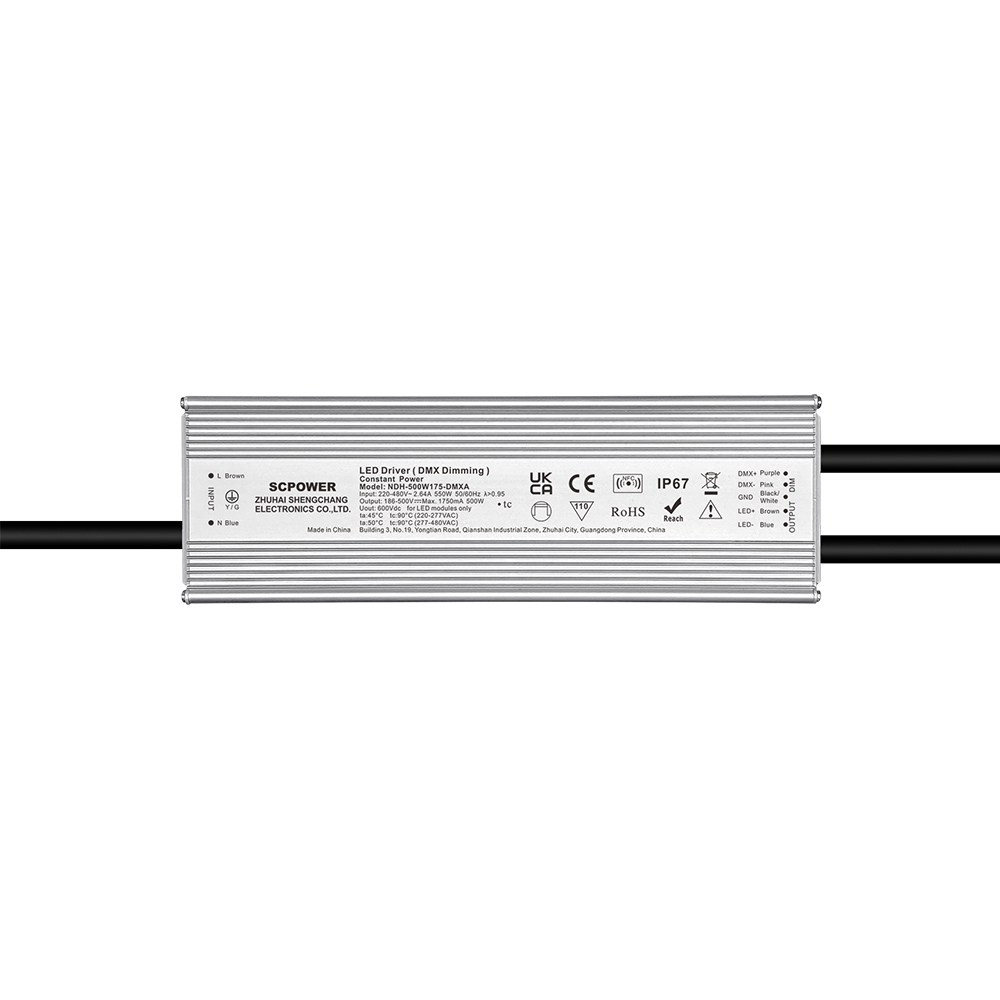
High power lighting systems are increasingly deployed across industrial facilities, warehouses, stadiums, transportation hubs, commercial buildings, and outdoor infrastructure projects where long operating hours, high lumen output, and reliable performance are required.
Compared with conventional lighting applications, these environments place significantly greater demands on LED drivers.
While fixture performance often receives most of the attention during procurement, the LED driver remains one of the most critical components affecting lighting stability, energy efficiency, and total operating cost.
A poorly selected driver can lead to overheating, efficiency loss, unstable output, accelerated aging, increased maintenance frequency, and reduced system lifespan.
The lifetime, efficiency, and reliability of a high power LED driver are primarily influenced by electrical design, thermal management, component quality, operating environment, load conditions, and dimming system compatibility.Selecting the right driver improves system reliability, lowers maintenance costs, and maximizes long term lighting performance.
For distributors, contractors, project developers, and procurement teams, understanding these factors is essential for selecting drivers that deliver consistent performance under demanding operating conditions.
This guide explains the key technical and commercial considerations that determine the lifetime and efficiency of high power lighting LED drivers.
Table of Contents
Toggle
What Is a High Power Lighting LED Driver
A high power LED driver is a power conversion device designed to deliver stable, efficient, and regulated output for high-wattage LED lighting systems operating under demanding conditions.
Unlike standard LED drivers used in low power applications, high power drivers must manage greater electrical loads while maintaining output consistency and protecting connected fixtures.
These drivers are commonly used in:
Industrial lighting
High bay lighting
Stadium lighting
Street and area lighting
Commercial facilities
Outdoor infrastructure
Core Driver Functions
Convert AC input into regulated output
Stabilize current and voltage
Support dimming and control systems
Protect against electrical fluctuations
Improve energy efficiency and power utilization
Because high power systems often operate continuously, driver quality becomes directly connected to project profitability.
Why LED Driver Lifetime Matters in High Power Applications
Driver lifetime directly impacts maintenance frequency, operational continuity, and total cost of ownership (TCO) across high power lighting projects.
In large installations, driver replacement creates direct labor costs and indirect downtime losses.
Even when LED fixtures remain functional, driver degradation may cause:
Reduced brightness
Flickering
Startup failure
Inconsistent performance
Unexpected maintenance events
Factors That Shorten Driver Life
Factor
Impact
High Temperature
Accelerated aging
Overloading
Component stress
Poor Ventilation
Heat accumulation
Input Voltage Fluctuation
Reduced stability
Inferior Components
Early failure
Why Longer Lifetime Creates Value
Longer operating life supports:
Lower maintenance costs
Reduced replacement frequency
Improved project reliability
Better operating efficiency
For commercial operators, lifecycle performance is often more valuable than initial purchase savings.
How Efficiency Directly Impacts Performance and Operating Costs
Driver efficiency affects energy consumption, thermal generation, operating expenses, and overall system reliability.
Efficiency represents how much input power becomes usable output.
Lower efficiency means more wasted energy converted into heat.
Benefits of High Efficiency Drivers
Lower electricity costs
Reduced internal temperature
Extended service life
Improved lighting consistency
Lower cooling demand and reduced thermal stress
Efficiency Comparison
Driver Efficiency
Heat Loss
Operating Result
88%
Higher
Increased thermal load
92%
Moderate
Balanced operation
95%
Lower
Better long term economics
Power Factor Considerations
A higher power factor (PF) contributes to:
Improved electrical utilization
Lower infrastructure load
More stable performance
High efficiency becomes increasingly valuable as operating hours increase.
The Role of Thermal Management in Driver Reliability
Thermal management is one of the most important factors influencing LED driver lifetime, efficiency, and long-term reliability.
Heat accelerates component aging and increases electrical stress.
High power lighting installations often operate in environments where airflow is limited.
Common Sources of Heat
Power conversion losses
Ambient temperature
Enclosed installation
Continuous operation
Thermal Optimization Practices
Maintain installation clearance
Reduce continuous peak load
Improve airflow
Separate heat sources
Temperature and Reliability
Operating Condition
Expected Outcome
Controlled Temperature
Longer lifespan
Moderate Heat
Stable performance
High Temperature
Faster degradation
Managing temperature effectively extends driver service life and improves operating stability.
How Electrical Design Influences Driver Lifetime
Electrical design directly determines the stability, efficiency, protection capability, and overall lifespan of a high power lighting LED driver.
While thermal performance and component quality receive significant attention, internal electrical architecture often becomes the deciding factor in whether a driver delivers reliable operation over years of continuous use.
High power LED drivers operate under elevated electrical stress compared with standard lighting systems. Their design must maintain stable output while handling voltage fluctuations, load changes, startup surges, and extended operating cycles.
Critical Electrical Design Elements
Input Voltage Range
A wider and more stable input range improves adaptability across different operating conditions.
Benefits include:
Stable operation during voltage fluctuation
Reduced electrical stress
Better project compatibility
Improved reliability
Output Regulation Accuracy
Output regulation affects:
Brightness consistency
Driver temperature
LED lifespan
Overall efficiency
Poor regulation often leads to flicker and reduced performance.
Ripple and Noise Control
Output ripple is frequently overlooked but has a measurable impact on system quality.
Lower ripple contributes to:
Better visual comfort
Improved LED protection
Reduced thermal loading
Longer operating life
Electrical Protection Features
Protection Function
Purpose
Over Voltage Protection
Prevent electrical overload
Over Current Protection
Protect output stability
Short Circuit Protection
Reduce failure risk
Over Temperature Protection
Extend service life
Surge Protection
Improve reliability under unstable power conditions
High quality protection mechanisms improve driver durability under demanding environments.
Capacitor Quality
Electrolytic capacitors are often the most life-limiting components inside LED drivers. Using high-quality capacitors rated for elevated temperatures significantly improves driver longevity, reliability, and performance under continuous high-power operation. Selecting capacitors with proper voltage and thermal ratings helps reduce premature failures, ensures stable output, and extends the overall service life of high power LED drivers.
Environmental Factors That Affect Long Term Performance
Operating environment strongly influences LED driver efficiency, reliability, and expected service life.
Even well designed drivers may underperform when installed in harsh conditions.
High power lighting systems are frequently exposed to:
Elevated temperatures
Humidity
Dust accumulation
Continuous operation
Outdoor conditions
Environmental Conditions to Evaluate
Ambient Temperature
Higher ambient temperature reduces cooling effectiveness and increases internal stress.
Humidity and Moisture Exposure
Moisture may accelerate aging and affect internal electrical components.
Dust and Air Quality
Dust accumulation reduces thermal performance and airflow efficiency.
Environmental evaluation should always be included during driver selection.
Common Procurement Mistakes and How to Avoid Them
Most high power LED driver failures are caused by specification mismatch and incomplete evaluation rather than product defects.
Procurement teams often prioritize price and power rating without considering long term performance.
Frequent Procurement Errors
Selecting an LED driver based only on wattage rating
Ignoring operating temperature
Overloading drivers continuously
Overlooking efficiency targets
Choosing incompatible control methods
Ignoring maintenance requirements
Better Procurement Approach
Before purchasing:
Confirm electrical specifications
Evaluate operating environment
Review thermal requirements
Verify efficiency targets
Validate control compatibility
Assess lifecycle expectations
Recommended Evaluation Matrix
Evaluation Area
Priority
Efficiency
Very High
Thermal Performance
Very High
Electrical Protection
High
Environmental Suitability
High
Cost
Medium
Projects that prioritize lifecycle performance generally achieve lower total ownership costs.
Building a Long Term Driver Selection Strategy
Long term success in high power lighting projects depends on selecting LED drivers based on lifecycle value instead of initial acquisition cost.
As lighting systems become more efficient and intelligent, drivers are evolving from supporting components into strategic infrastructure assets.
Organizations that standardize selection criteria and establish long term procurement processes often achieve:
Lower maintenance expenses
Higher operating stability
Improved energy performance
Longer replacement cycles
Better project consistency
Recommended Procurement Framework
Define electrical standards
Establish efficiency requirements
Validate thermal performance
Standardize control compatibility
Monitor field operating data
Long Term Business Impact
Focus Area
Business Benefit
Higher Efficiency
Reduced energy cost
Better Reliability
Lower maintenance
Strong Protection
Improved stability
Thermal Optimization
Extended lifespan
Conclusion
Choosing the right high power LED driver involves more than simply matching wattage requirements. Driver lifetime and efficiency are directly influenced by electrical design, thermal management, environmental conditions, operating load, and system compatibility.
For high power lighting applications, buyers should prioritize efficiency, thermal stability, protection capability, and long term reliability rather than focusing only on initial purchase cost.
By evaluating performance from a lifecycle perspective, businesses can build lighting systems that deliver stable operation, lower maintenance costs, and greater long term value.