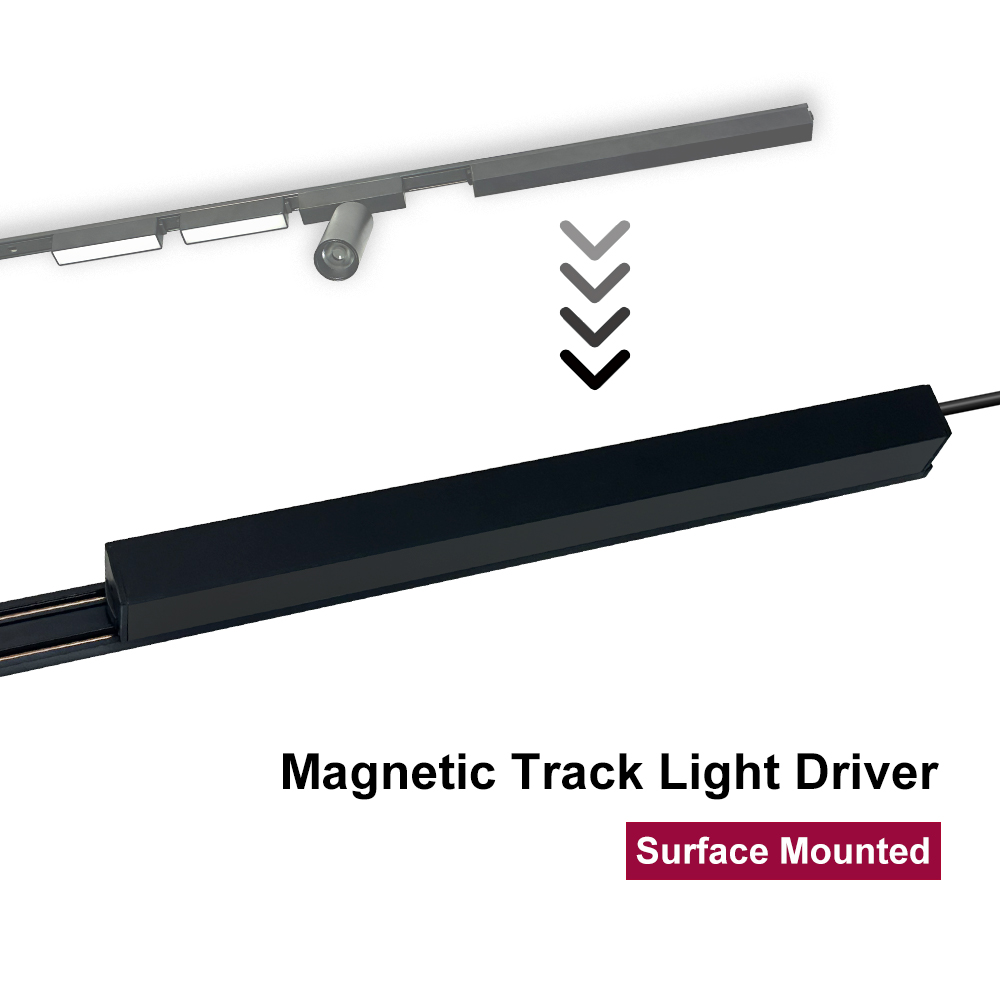
Magnetic track lighting systems have become a popular choice across commercial, hospitality, office, retail, and high-end residential projects because of their modular design, flexible fixture positioning, and minimalist appearance.
As demand for minimalist and adaptable lighting grows, one component is often overlooked: the LED driver. In reality, issues such as flickering, unstable brightness, dimming problems, overheating, and shorter lifespan are frequently caused by incorrect driver selection rather than fixture quality.
The right magnetic track LED driver should be selected based on track voltage, output architecture, dimming requirements, power load, installation conditions, and long-term reliability. A suitable driver helps ensure stable performance, better lighting quality, and lower maintenance costs.
Whether you are a distributor, contractor, importer, or procurement manager, understanding driver selection is essential for building reliable magnetic track lighting systems.
This guide explains how to evaluate magnetic track LED drivers and make smarter purchasing decisions for B2B projects.
What Is a Magnetic Track Light LED Driver and Why Does It Matter
A magnetic track lighting LED driver converts AC input power into regulated low-voltage DC output, typically 24VDC or 48VDC, for magnetic track lighting systems while controlling voltage, current, efficiency, dimming behavior, and protection functions throughout the lighting system.
Unlike conventional standalone luminaires, magnetic track systems often distribute power across multiple fixtures through a shared infrastructure. This creates a higher dependency on driver performance.
A properly selected driver performs multiple essential functions:
Converts AC input to regulated DC output
Stabilizes voltage and current
Supports dimming communication
Protects against overload and short circuit
Improves energy efficiency
Extends fixture lifespan
If driver output becomes unstable, the entire lighting system can experience performance issues.
Typical Magnetic Track Lighting Components
Because one driver may support multiple luminaires, its quality has a multiplied effect across the project.
Component
Function
Track Rail
Supports fixtures and distributes power
LED Fixtures
Generate illumination
LED Driver
Converts and controls power
Dimming Interface
Controls brightness
Control System
Enables automation
Magnetic Track power Supply
Supplies low-voltage power to the track
Why Driver Selection Is Often Overlooked
In many procurement processes, decision makers compare fixture appearance, lumen output, and price but ignore electrical architecture.
This approach creates long-term risk.
When lighting projects fail, replacing fixtures is often unnecessary. The actual solution is frequently upgrading or replacing the driver.
Selecting drivers correctly at the beginning reduces:
Maintenance frequency
Service interruptions
Warranty claims
Installation revisions
Operating expenses
Common Problems Caused by Incorrect Driver Selection
Selecting the wrong magnetic track LED driver can negatively impact the performance, reliability, and lifespan of the entire lighting system. Because the driver serves as the power source and control center for magnetic track fixtures, any mismatch between the driver and the system requirements may lead to operational issues and increased maintenance costs.
Common problems include:
Track Voltage Mismatch – Using a driver with an output voltage that does not match the track system can result in unstable operation, reduced performance, or fixture failure.
Fixture Compatibility Issues – Different magnetic track luminaires may require specific electrical parameters. An incompatible driver can cause certain fixtures to function improperly or fail to operate altogether.
Dimming Instability – Incorrect driver and dimming protocol combinations may lead to flickering, flashing, delayed response, limited dimming range, or uneven brightness levels.
Reduced System Lifespan – Drivers operating outside their optimal specifications can accelerate component aging, reducing the service life of both the driver and connected luminaires.
Overheating of Enclosed Power Supplies – In recessed ceilings or confined installation spaces, an undersized or poorly matched driver may generate excessive heat, leading to reduced efficiency, thermal protection shutdowns, and long-term reliability issues.
To avoid these problems, buyers should always verify voltage requirements, fixture compatibility, dimming protocols, power capacity, and installation conditions before selecting a magnetic track LED driver.
Understanding Constant Voltage and Constant Current Driver Selection
Magnetic track lighting systems typically use either constant voltage or constant current drivers, and choosing the incorrect output type can cause compatibility and reliability issues.
Understanding the difference is one of the first steps in professional driver selection.
Constant Voltage Drivers
Constant voltage drivers maintain fixed voltage output while allowing current demand to change depending on fixture load.
Typical characteristics include:
Fixed voltage operation
Supports multiple fixtures
Flexible expansion
Easier installation
Applications often include:
48V magnetic track lighting systems
Modular track lighting installations
Commercial magnetic lighting projects
Constant Current Drivers
Constant current drivers maintain fixed current output and automatically adjust voltage.
Advantages include:
Improved LED protection
Stable brightness
Higher precision output
Better consistency
Applications include:
High-performance architectural lighting
Specialized LED modules
Precision lighting environments
Comparison Table
Factor
Constant Voltage
Constant Current
Scalability
High
Moderate
Fixture Compatibility
Broad
Controlled
Installation Complexity
Lower
Higher
Brightness Consistency
Moderate
Excellent
Maintenance
Easier
More Technical
Practical Selection Considerations
For most modular magnetic track projects, constant voltage systems offer higher installation flexibility.
For premium performance environments where consistency matters, constant current architecture may deliver better results.
Selection should always match fixture requirements rather than installer preference.
How to Calculate Driver Capacity for Magnetic Track Lighting Projects
Driver capacity should exceed actual lighting load to maintain stable performance, prevent overheating, and extend operational life.
Selecting driver wattage based only on total fixture power is one of the most common purchasing mistakes.
Professional projects always maintain power reserve.
Standard Capacity Formula
Driver Capacity = Total Fixture load × Safety Margin
For 48V magnetic track systems, maintaining a 20–30% power reserve is recommended to ensure thermal stability and future expansion.
Recommended reserve:
Residential applications: 15–20%
Commercial projects: 20–25%
Continuous operation projects: 25–30%
Example
Parameter
Value
Number of Fixtures
10
Power Per Fixture
20W
Total Load
200W
Reserve
25%
Recommended Driver
250W
Additional Factors Affecting Capacity
Driver selection should also consider:
Startup current
Voltage fluctuations
Cable losses
Dimming conditions
Environmental temperature
Future expansion
Oversizing excessively can reduce efficiency.
Undersizing increases temperature and accelerates component aging.
The goal is optimized loading rather than maximum loading.
How Dimming Protocol Selection Affects System Performance
Dimming compatibility directly influences user experience, installation complexity, energy savings, and future scalability.
As smart lighting adoption increases, dimming systems have become an important procurement factor.
Common Dimming Technologies
Protocol
Advantages
Typical Use
TRIAC
Simple retrofit
Residential
0–10V
Stable analog control
Commercial
DALI
Intelligent control
Large projects
Wireless
Flexible installation
Smart spaces
How to Select a Dimming Method
Small projects usually prioritize simplicity.
Large commercial environments prioritize centralized management.
Selection considerations include:
Number of fixtures
Future upgrade plans
Existing infrastructure
Building automation requirements
Common Dimming Problems
Poor compatibility can lead to:
Flickering
Limited dimming range
Delayed response
Uneven brightness
Control instability
Testing compatibility before mass procurement significantly reduces risk.
Installation Environment and Thermal Management Considerations
Installation conditions strongly affect driver efficiency, reliability, and lifespan.
Magnetic track LED drivers are often installed inside recessed ceilings, narrow cavities, or enclosed architectural structures where airflow may be limited.
Heat is one of the largest contributors to electronic failure.
Environmental Factors to Evaluate
Ambient temperature
Air circulation
Dust exposure
Humidity conditions
Installation orientation
Operating schedule
Recommended Thermal Practices
Leave sufficient clearance
Avoid enclosed compartments
Separate power and signal cables
Maintain reserve capacity
Reduce continuous peak load
Impact of Temperature on Service Life
Temperature
Estimated Reliability
Lower Operating Temperature
Longer lifespan
Moderate Temperature
Stable performance
High Temperature
Accelerated aging
Effective thermal management reduces replacement cycles and improves system consistency.
How to Evaluate Reliability, Safety, and Service Life
Driver quality should be evaluated through electrical performance, protection capability, durability, and expected operational lifetime.
Price alone rarely reflects actual value.
Key Evaluation Indicators
Indicator
Target
Efficiency
Above 90%
Power Factor
≥0.95 THD ≤10%
THD
Low
Thermal Stability
High
Protection Functions
Complete
Essential Protection Functions
Over voltage protection
Over current protection
Over temperature protection
Short circuit protection
Open circuit protection
Reliability Evaluation Checklist
Before procurement:
Request test reports
Confirm operating conditions
Verify environmental suitability
Review warranty terms
Validate compatibility
Reliable drivers create lower lifecycle costs.
Common Procurement Mistakes and How to Avoid Them
Most magnetic track lighting failures are caused by system mismatch rather than manufacturing defects.
Procurement teams should evaluate the complete lighting ecosystem.
Frequent Purchasing Errors
Selecting exact load capacity
Ignoring dimming compatibility
Overlooking thermal conditions
Choosing incompatible electrical standards
Focusing only on unit price
Better Procurement Practices
Define technical specifications first
Standardize driver architecture
Verify compatibility early
Conduct pilot testing
Build inventory planning
Projects managed systematically generally outperform price-driven procurement.
Building a Long Term LED Driver Procurement Strategy
Successful magnetic track lighting projects depend on selecting drivers based on lifecycle value instead of initial purchase cost.
LED drivers are becoming strategic infrastructure components rather than secondary accessories.
Organizations that establish standardized procurement processes often achieve:
Lower maintenance costs
More stable project delivery
Better customer satisfaction
Improved scalability
Recommended Procurement Framework
Standardize electrical specifications
Define dimming architecture
Establish testing procedures
Monitor field performance
Create replacement planning
Magnetic track lighting systems continue evolving toward intelligent control and modular expansion.
Selecting the correct LED driver is no longer simply an engineering decision.
It is a business decision that directly affects installation efficiency, operating cost, project reliability, and long-term customer value.
By evaluating output architecture, dimming compatibility, thermal conditions, reliability indicators, and procurement strategy together, buyers can create magnetic track lighting systems that remain efficient and dependable throughout their entire operating lifecycle.
How to Select Between Remote and Built-in Magnetic Track Drivers
When choosing a magnetic track lighting system, one important consideration is whether to use a remote driver or a built-in driver. Both options provide stable power for magnetic track lights, but they differ in maintenance requirements, installation methods, system capacity, and overall aesthetics. Understanding the advantages of each solution can help designers, contractors, and property owners make the right decision based on project requirements.
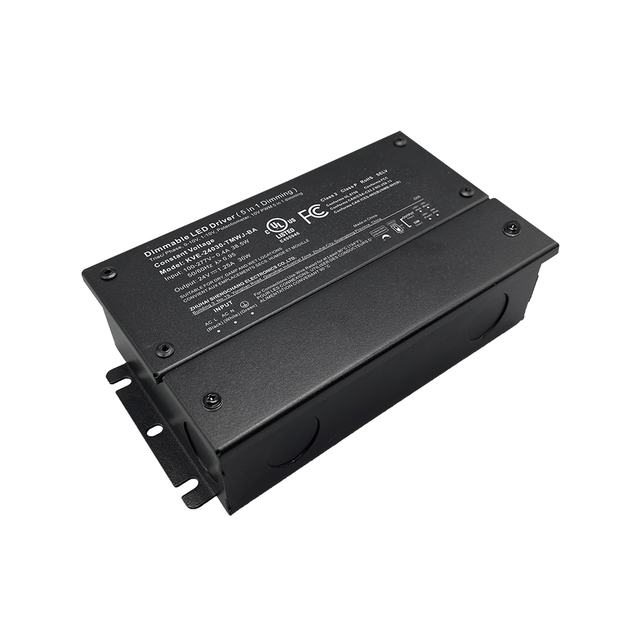
Remote drivers are installed separately from the magnetic track, usually inside a ceiling cavity, electrical cabinet, or dedicated maintenance area. This design offers several practical benefits, especially for commercial and large-scale lighting projects.
One of the biggest advantages is easier maintenance. Because the driver is located away from the track, technicians can access, inspect, or replace it without removing lighting fixtures or opening finished ceiling surfaces. This reduces downtime and maintenance costs over the life of the system.
Remote drivers also provide better thermal performance. Separating the driver from the lighting fixtures allows heat to dissipate more effectively, helping maintain stable operating temperatures. Improved heat management can extend driver lifespan and enhance overall system reliability.
In addition, remote driver systems typically offer higher power capacity. They can support longer track runs and a greater number of luminaires, making them ideal for retail stores, offices, hotels, galleries, and other projects with extensive lighting requirements.
Built-in drivers are integrated directly into the magnetic track system, creating a compact and streamlined lighting solution. They are particularly popular in residential and high-end interior applications where aesthetics play a significant role.
A key benefit is the cleaner appearance. Since the driver is hidden within the track, there is no need for a separate driver box or additional installation space. This helps create a minimalist look that complements modern architectural designs.
Built-in drivers also allow for simplified installation. With fewer external components involved, installation becomes faster and more straightforward. This can help reduce labor time and simplify project coordination.
Another advantage is reduced wiring. The integrated design minimizes the number of external cable connections required, resulting in a neater installation and lowering the risk of wiring-related issues. For projects where ceiling space is limited or visual cleanliness is a priority, built-in driver systems are often the preferred choice.
Types of Magnetic Dimmable LED Drivers
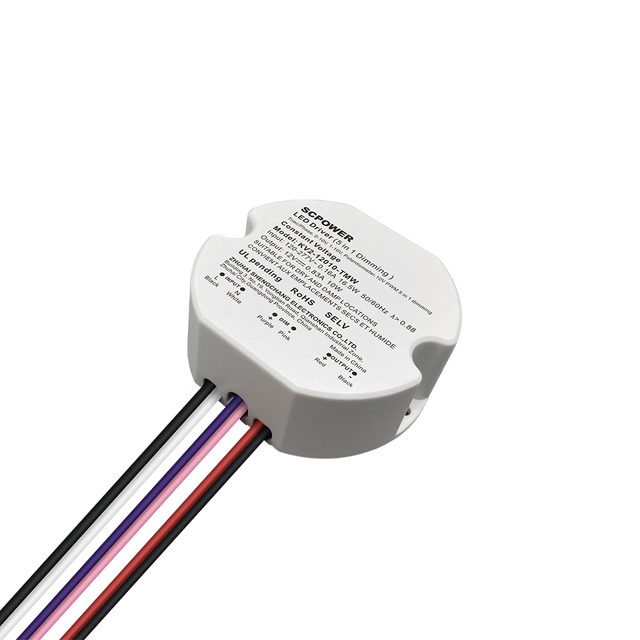
Magnetic dimmable LED drivers play a critical role in magnetic track lighting systems, providing stable power delivery and smooth dimming performance for various lighting applications. Depending on the track design and installation requirements, magnetic track drivers are generally available in two main series: Recessed Magnetic Dimmable LED Drivers and Ultrathin Magnetic Dimmable LED Drivers.
Recessed Magnetic Dimmable LED Driver
The Recessed Magnetic Dimmable LED Driver is specifically designed for recessed magnetic track lighting systems and is applicable to 20 models of embedded universal tracks. With its concealed installation design, the driver can be integrated neatly into the ceiling structure, maintaining a clean and sophisticated appearance.
Key features include:
Applicable to 20 models of embedded universal tracks
Stable and reliable dimming performance
Seamless integration with recessed magnetic track systems
Space-saving concealed installation
Suitable for residential, commercial, hospitality, and retail projects
This driver series is ideal for projects that require a minimalist ceiling design while ensuring consistent lighting control and long-term reliability.
Ultrathin Magnetic Dimmable LED Driver
The Ultrathin Magnetic Dimmable LED Driver is developed for 20mm and 26mm magnetic track systems. Featuring a slim and compact profile, it is particularly suitable for applications where installation space is limited.
Key features include:
Compatible with 20mm and 26mm magnetic track models
Ultra-thin design for flexible installation
High-efficiency power conversion
Smooth dimming performance with excellent stability
Easy integration into modern lighting systems
Its compact construction makes it a preferred solution for apartments, villas, boutiques, offices, galleries, and other projects where ceiling depth and installation flexibility are important considerations.
Choosing the Right Magnetic Dimmable LED Driver
Selecting the appropriate magnetic dimmable LED driver depends primarily on the track type and project requirements. Recessed Magnetic Dimmable LED Drivers are best suited for embedded universal track systems that prioritize a seamless architectural appearance, while Ultrathin Magnetic Dimmable LED Drivers provide greater flexibility for 20mm and 26mm magnetic tracks where space-saving installation is required.
By matching the driver to the track system, users can ensure optimal dimming performance, system compatibility, and long-term operational stability.