Introduction
Why do some LED lights dim smoothly while others flicker?In many cases, the difference comes from the type of dimmable power supply being used.In this article, we will explain how it works, explore different types, and help you choose the right solution for stable and flexible lighting control.
What Is a Dimmable Power Supply and How Does It Work?
Definition of a Dimmable Power Supply
A dimmable power supply is designed to convert incoming AC electricity into stable DC output while allowing LED brightness to be adjusted through compatible dimming protocols such as TRIAC, 0–10V, or DALI. It plays a central role in LED systems, especially when flexibility and user comfort matter. Instead of delivering fixed power, it adjusts output dynamically, which makes lighting more adaptable across different environments.
For LED strip applications, this type of power supply ensures consistent performance while enabling smooth dimming. It works as both a power conversion unit and a control interface, helping the lighting system respond to real-time user input. Many modern solutions, such as those developed by Suretron, integrate multiple dimming protocols, making them suitable for both simple and advanced lighting systems.
Key characteristics include:
| Feature | Description | Why It Matters |
| Power Conversion | Converts AC to DC for LED operation | Ensures safe and stable LED performance |
| Dimming Capability | Adjusts brightness via control signals | Improves lighting flexibility |
| Compatibility | Works with different dimming systems | Prevents system mismatch issues |
How LED Strip Dimmable Power Supply Works
When we look deeper into how an LED Strip Dimmable Power Supply works, it becomes clear that it is more than a simple transformer. The power supply receives an external dimming signal and adjusts the output current or voltage to reduce LED brightness while maintaining stable operation. This process allows LEDs to dim smoothly without sudden jumps or visible flicker.
Inside the system, the driver reacts to dimming commands. It modifies electrical output in real time, ensuring that brightness changes feel natural. If everything is matched correctly, the light transitions remain stable and consistent across the full dimming range.
Here is how the process typically works:
The power supply receives AC input and converts it to DC output
A dimming signal is sent from a controller or dimmer
The driver interprets the signal and adjusts output levels
The LED strip responds with smooth brightness changes
| Step | What Happens Internally | Result on LED Strip |
| AC to DC Conversion | Input power is stabilized and converted | LEDs receive correct voltage |
| Signal Processing | Dimming command is detected and analyzed | System prepares brightness change |
| Output Adjustment | Voltage or current is modified in real time | Light becomes brighter or dimmer |
| Stability Control | Circuit prevents flicker and overload | Smooth and reliable lighting |
In practical use, this means we can control lighting in a more precise way. It becomes easier to create comfortable environments, whether for homes, offices, or retail spaces. Suretron’s dimmable power supplies support a wide range of dimming methods, which helps ensure compatibility across different control systems. That flexibility makes integration simpler, especially in projects that require multiple lighting zones or smart control features.
Another important detail is flicker prevention. A well-designed dimmable power supply reduces instability by maintaining consistent output. Poor matching can lead to visible flicker or limited dimming range, which affects both performance and user experience. That is why selecting a compatible LED Strip Dimmable Power Supply is critical for achieving reliable lighting results.
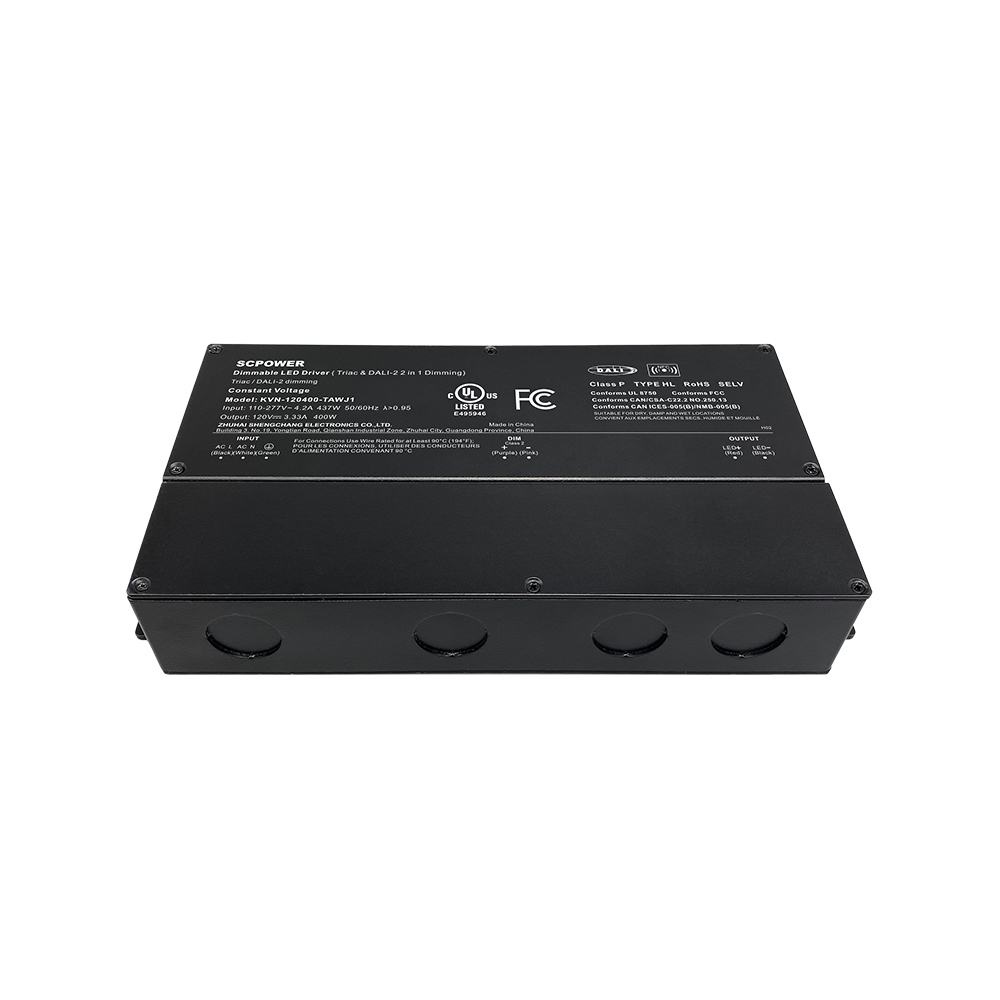
Types of LED Strip Dimmable Power Supply
Phase-Cut (Triac) Dimmable Power Supply
Phase-cut dimming, often called Triac dimming, is one of the most widely used solutions in residential lighting. It works by cutting portions of the AC waveform, which reduces the power delivered to the LED Strip Dimmable Power Supply. This method is simple and familiar, so many existing installations can use it without major changes.
In real scenarios, it fits projects where ease of installation matters more than advanced control. Many users prefer it because they can keep their existing wall dimmers. However, performance at low brightness may vary depending on compatibility.
Installation Simplicity:
Works directly with traditional wall dimmers already installed. No additional control wiring is required, which makes upgrades fast and cost-effective for homeowners or small projects.
Common Applications:
Frequently used in residential environments such as living rooms, bedrooms, and small retail spaces where basic dimming is sufficient. It performs well in spaces that do not require advanced lighting scenes.
Control Limitations:
Offers limited dimming precision, especially at lower brightness levels. In some cases, improper matching may lead to flickering or uneven dimming performance.
| Aspect | Details | Practical Impact |
| Control Method | AC phase-cut signal | Easy to integrate |
| Installation | No extra wiring | Saves time and cost |
| Precision | Moderate | Less smooth at low levels |
| Best Scenario | Residential lighting | Simple and reliable solution |
0-10V / 1-10V Dimmable Power Supply
This type of LED Strip Dimmable Power Supply uses a low-voltage signal to control brightness. It is commonly used in commercial environments because it delivers stable and predictable dimming behavior. The separation between power and control improves overall system reliability.
In practice, this setup requires extra wiring, but the result is smoother dimming and better consistency. It is often chosen when lighting quality must remain stable across different brightness levels.
Control Accuracy:
Uses an analog voltage signal to adjust brightness levels gradually. This allows smooth transitions from full brightness down to very low levels without sudden jumps.
System Structure:
Requires dedicated control wiring separate from the main power line. While this adds complexity during installation, it improves signal stability and reduces interference.
Typical Use Cases:
Suitable for offices, commercial buildings, and large indoor environments where consistent lighting performance is important. It is often used in projects with long operating hours.
| Signal Level | Brightness Output | Behavior Description |
| 10V | 100% | Full brightness |
| 5V | ~50% | Balanced lighting |
| 1V | Minimum dim level | Very low but stable output |
| 0V | Off (in some systems) | Depends on driver design |
Digital Dimming (DALI, DMX, Smart Systems)
Digital dimming systems offer advanced control capabilities for LED Strip Dimmable Power Supply solutions. Instead of simple voltage signals, they use communication protocols to send detailed instructions. This allows lighting systems to respond dynamically across multiple zones.
These systems are often used in large-scale projects where lighting needs to be controlled centrally. They support features such as scene setting and scheduling, which improve both functionality and user experience.
Advanced Control Features:
Enables scene presets, group control, and scheduling functions. Lighting can be adjusted automatically based on time or usage requirements, improving efficiency and convenience.
Scalability:
Supports multi-zone systems, making it suitable for large buildings or complex lighting layouts. Each area can be controlled independently while still being part of one system.
Professional Applications:
Commonly used in hotels, offices, and commercial projects where lighting design plays an important role. Suretron supports protocols like DALI-2 and DMX512, which helps ensure compatibility in such environments.
Wireless Smart Dimmable Power Supply
Wireless smart dimming is becoming increasingly popular in modern lighting systems. This type of LED Strip Dimmable Power Supply uses wireless technologies such as WiFi, ZigBee, or BLE to control brightness without additional signal wiring.
From a user perspective, it offers convenience and flexibility. It allows lighting to be controlled remotely, which fits well with smart home and IoT applications.
Wireless Convenience:
Eliminates the need for control cables, simplifying installation. This is especially useful in renovation projects where running new wires is difficult.
Smart Control Options:
Supports app-based control, remote access, and even voice commands. Users can adjust brightness, create schedules, or switch scenes from anywhere.
Modern Applications:
Ideal for smart homes, hospitality spaces, and modern commercial environments where connected systems are expected. Suretron integrates wireless control options to support these evolving needs.
Key Features to Consider When Choosing LED Strip Dimmable Power Supply
Output Type: Constant Voltage vs Constant Current
When selecting an LED Strip Dimmable Power Supply, the first thing we need to understand is the output type. It directly affects how the LED strip performs and how stable the system will be over time. Most LED strips on the market are designed for constant voltage, but some specialized lighting setups require constant current.
If the output type does not match the LED strip, problems can appear quickly. These may include uneven brightness, overheating, or even damage to the LEDs. So it is important to check specifications before making a decision.
Constant Voltage Usage:
Commonly used for LED strip lighting such as 12V or 24V systems. It provides a fixed voltage output, allowing multiple LEDs to operate evenly across the strip. This makes it ideal for general lighting applications.
Constant Current Application:
Designed for systems where current must remain stable. It adjusts voltage automatically to maintain consistent current flow. This type is often used in high-performance or specialized LED setups.
Matching Importance:
Always match the power supply output type to the LED strip requirements. A mismatch can reduce lifespan and affect performance. Checking datasheets helps avoid costly mistakes.
Power Rating and Load Calculation
Power rating is another critical factor when choosing an LED Strip Dimmable Power Supply. It determines whether the system can handle the total load of the connected LED strips. Underestimating power needs can lead to overheating and system failure.
To avoid issues, we should calculate the total wattage of the LED strips and then add a safety margin. This extra capacity helps the power supply operate more efficiently and last longer.
Wattage Calculation:
Multiply the wattage per meter of the LED strip by the total length used. This gives the base power requirement for the system.
Safety Margin:
Add 20–30% extra capacity to the calculated load. This prevents the power supply from running at full load continuously, which improves reliability.
Performance Stability:
A properly sized power supply reduces heat generation and maintains consistent output. It also helps extend the lifespan of both the driver and the LED strips.
| Parameter | Example Value | Explanation |
| LED Strip Power | 10W/m | Power consumption per meter |
| Total Length | 5 meters | Installation length |
| Total Load | 50W | 10W × 5m |
| Recommended Supply | 60–65W | Includes 20–30% safety margin |
Compatibility with Dimming Systems
Compatibility is often overlooked, but it plays a major role in how well an LED Strip Dimmable Power Supply performs. The dimming method must match the control system being used. Otherwise, issues like flickering or limited dimming range may appear.
Different projects require different dimming protocols. Some use simple wall dimmers, while others rely on advanced control systems. Choosing a compatible power supply ensures smooth operation.
Protocol Matching:
Make sure the power supply supports the same dimming method as the controller. Options may include Triac, 0-10V, DALI, or digital systems.
Performance Impact:
Incorrect pairing can cause flickering, noise, or unstable brightness. Proper matching ensures smooth and consistent dimming across the full range.
System Integration:
In complex lighting setups, compatibility allows multiple devices to work together. Suretron supports various dimming protocols, making integration easier across different applications.
Protection Level and Certifications
The environment where the LED Strip Dimmable Power Supply is installed affects the level of protection required. Indoor installations may need only basic protection, while outdoor or humid environments require higher ratings.
Certifications also play an important role, especially for commercial projects. They ensure that the product meets safety and regulatory standards.
IP Rating Selection:
IP20 is suitable for indoor dry environments. IP66 or IP67 is better for outdoor or wet locations where moisture protection is needed.
Safety Certifications:
Certifications such as UL, CE, and RoHS indicate compliance with safety and environmental standards. They are often required in regulated markets.
Project Requirements:
For commercial or export projects, certified products help ensure approval and reduce risk. Suretron provides products with multiple global certifications, supporting different market needs.
Applications and Benefits of LED Strip Dimmable Power Supply
Residential Lighting Applications
In residential environments, an LED Strip Dimmable Power Supply helps create flexible and comfortable lighting. It allows users to adjust brightness based on time, mood, or activity. Instead of fixed lighting, we can easily switch from bright task lighting to soft ambient lighting.
This flexibility improves daily living experiences. It also supports energy-saving habits, since lights can be dimmed when full brightness is not needed. Many homeowners now prefer dimmable systems for modern interiors.
Living Space Comfort:
Used in living rooms, bedrooms, and kitchens to adjust brightness for different activities. Bright lighting works for tasks, while dim lighting creates a relaxed atmosphere in the evening.
Energy Efficiency:
Lower brightness means lower power consumption. Over time, this reduces electricity usage and operating costs, especially in frequently used spaces.
User-Friendly Control:
Simple dimming methods or smart control systems make it easy to adjust lighting. Suretron supports multiple dimming options, which helps users match their preferred control style.
Commercial and Architectural Lighting
In commercial and architectural projects, lighting plays a key role in visual presentation and user experience. A LED Strip Dimmable Power Supply allows lighting designers to create different scenes based on time, purpose, or customer interaction.
This type of system is widely used in retail stores, offices, and hospitality environments. It helps improve both functionality and aesthetics, making spaces more attractive and efficient.
Scene Flexibility:
Lighting levels can be adjusted throughout the day. Bright settings may be used during business hours, while softer lighting can enhance atmosphere in the evening.
Visual Enhancement:
Proper dimming highlights products, textures, and architectural details. This improves overall presentation and can influence customer perception.
System Integration:
Advanced dimming solutions allow integration into building control systems. Suretron supports protocols like DALI and smart control, which helps manage lighting across multiple zones.
Industrial and Outdoor Lighting Use
Industrial and outdoor environments require more robust lighting solutions. A LED Strip Dimmable Power Supply used in these settings must handle harsher conditions, including moisture, dust, and temperature changes.
In these scenarios, durability and reliability become more important than simple convenience. Dimmable systems still provide benefits, but they must be combined with proper protection and stable performance.
High Durability Requirements:
Systems need strong housing and high protection ratings. IP66 or IP67 power supplies are often required to ensure resistance to water and dust.
Reliable Performance:
Lighting must remain stable even under demanding conditions. A well-designed dimmable power supply reduces failure risk and maintains consistent output.
Functional Flexibility:
Even in industrial settings, adjustable brightness can improve efficiency. It allows operators to adapt lighting levels based on tasks or working conditions.
Conclusion
A dimmable power supply controls brightness and stabilizes LED output. It improves efficiency, comfort, and flexibility across many applications. Suretron offers LED Strip Dimmable Power Supply solutions with multiple dimming options, wide compatibility, and reliable performance, helping users achieve stable lighting and easier system integration.
FAQ
Q: What is an LED Strip Dimmable Power Supply?
A: It converts AC power into stable DC output and allows LED brightness to be adjusted smoothly.
Q: How do I choose the right LED Strip Dimmable Power Supply?
A: Match voltage, wattage, and dimming type for LED Strip Dimmable Power Supply compatibility.
Q: Why is my LED Strip Dimmable Power Supply flickering?
A: Flickering often comes from mismatched dimmers or incorrect LED Strip Dimmable Power Supply pairing.
Q: Can LED strips work without a dimmable power supply?
A: Yes, but LED Strip Dimmable Power Supply allows brightness control and better flexibility.
Q: Are LED Strip Dimmable Power Supply systems energy efficient?
A: Yes, they reduce power usage by lowering brightness when full output is not needed.


