Introduction
Can 220V LED strips really dim smoothly? Many users feel unsure about this question. The answer depends on using the right LED Strip Dimmable Power Supply and matching system. In this article, you will learn how dimming works and how to choose the best solution.
How 220V LED Strip Dimming Works with LED Strip Dimmable Power Supply
What Is a 220V LED Strip and How It Differs from Low-Voltage Strips
A 220V LED strip connects directly to high-voltage AC power, as it has a built-in rectifer&constant-current driver integrated on the strip. No extemal transformer is required in many cases.
This design makes installation easier for long-distance lighting, especially in outdoor or architectural projects. However, high-voltage operation also changes how dimming behaves and how control systems must be selected.
Low-voltage LED strips, on the other hand, typically run on 12V or 24V DC and require a power supply to convert AC input into stable DC output.That extra conversion step allows more precise control, especially for smooth dimming using PWM or signal-based systems.
| Feature | 220V LED Strip (High Voltage) | Low Voltage LED Strip (12V/24V) |
| Input Power | Direct AC (220V) | AC converted to DC |
| Installation Distance | Suitable for long runs | Limited by voltage drop |
| Dimming Control | Requires AC-compatible dimming | Supports precise PWM dimming |
| Power Supply Requirement | Mandatory dedicated AC dimmerdriver for dimming | Required (LED Strip Dimmable Power Supply) |
| Safety Level | Higher risk due to voltage | Safer for indoor applications |
Power conversion plays a crucial role in dimming performance. Stable voltage ensures uniform brightness across the strip. Without proper regulation, dimming may cause flicker or uneven lighting.That is why many systems still rely on an LED Strip Dimmable Power Supply, even in 220V applications.
Role of LED Strip Dimmable Power Supply in Dimming Systems
A LED Strip Dimmable Power Supply does much more than deliver power. It controls how brightness changes and ensures the LED strip reacts correctly to dimming signals. A well-matched power supply improves both performance and reliability.
Here is how it supports the system in real-world use:
Power Conversion
AC input is stabilized before reaching the LED strip.
Voltage output stays consistent under different load conditions.
Electrical protection reduces the risk of overheating or damage.
Signal Processing
Dimming signals from TRIAC, 0-10V, or DALI are interpreted correctly.
Control signals are translated into smooth brightness changes.
Integration becomes easier for smart or automated lighting systems.
Lighting Performance
Flicker is minimized during dimming transitions.
Brightness adjustment feels smooth and natural.
Light output remains stable across different dimming levels.
Different dimming methods require compatible power supply designs. Each method works in a unique way, so matching the system correctly is essential.
| Dimming Method | Working Principle | Common Application |
| TRIAC | Adjusts AC waveform phase | Residential dimming systems |
| 0-10V | Uses analog voltage signal | Commercial lighting control |
| DALI | Digital communication protocol | Smart building systems |
| DMX512 | Signal-based control system | Stage and architectural lighting |
Modern LED projects often need flexibility. A high-quality LED Strip Dimmable Power Supply supports multiple dimming options, making system design easier. It also reduces compatibility issues between components and improves the overall user experience.
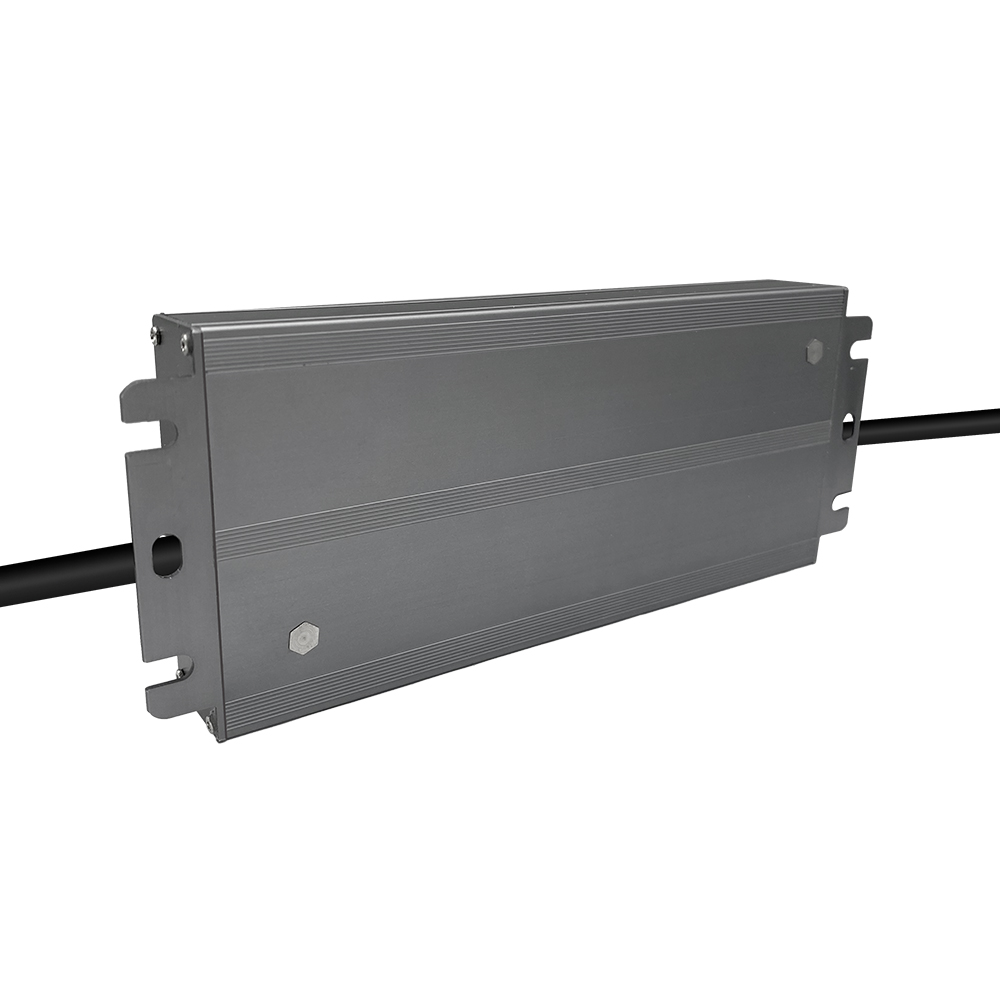
Types of LED Strip Dimmable Power Supply for 220V Applications
TRIAC Dimmable Power Supply for LED Strips
TRIAC dimmable solutions are one of the most common choices for 220V LED strip systems. They work directly with traditional wall dimmers, so installation feels familiar for many users. In residential projects, this approach often reduces complexity because existing wiring can still be used without major changes.
A TRIAC-based LED Strip Dimmable Power Supply adjusts brightness by cutting parts of the AC waveform. This method allows gradual dimming, but performance depends on compatibility between the dimmer and the power supply. When matched correctly, brightness changes feel smooth and stable across different levels.
Compatibility Advantages
Standard AC dimmers can be reused in many retrofit projects.
Installation stays simple since no extra control wiring is required.
System setup works well for home lighting upgrades and renovations.
Typical Use Scenarios
Living rooms, bedrooms, and decorative lighting areas.
Small commercial spaces where simple control is enough.
Projects where cost and ease of installation matter more than advanced control.
0-10V and DALI LED Strip Dimmable Power Supply
For commercial or large-scale projects, 0-10V and DALI solutions offer more precise control. These systems use signal-based dimming instead of modifying the AC waveform. As a result, brightness adjustments feel more accurate and consistent across long installations.
A 0-10V LED Strip Dimmable Power Supply adjusts brightness based on a voltage signal. DALI systems go further by enabling digital communication between devices. This allows centralized control, grouping, and automation, which are useful in offices, hotels, and public buildings.
Control Benefits
Brightness can be adjusted precisely across multiple zones.
Lighting systems can be grouped and managed from a central point.
Integration becomes easier for smart building automation systems.
Application Advantages
Large commercial lighting layouts benefit from synchronized control.
Architectural lighting projects require consistent dimming across long runs.
Energy management systems can optimize lighting based on usage patterns.
Smart Dimming Power Supplies (WiFi, ZigBee, BLE)
Smart dimming is becoming more popular in both residential and commercial spaces. Wireless control removes the need for complex wiring, which makes installation faster and more flexible. Users can adjust brightness through mobile apps, remote controls, or voice systems.
A smart LED Strip Dimmable Power Supply connects to wireless networks and responds to digital commands. This allows real-time control, scheduling, and scene setting. It also improves user experience because lighting can be adjusted without physical switches.
Smart Control Features
Remote dimming through mobile applications or control hubs.
Scene settings for different moods or activities.
Integration into smart home ecosystems for automation.
Practical Benefits
Reduced wiring complexity in modern buildings.
Flexible control across multiple rooms or zones.
Convenient operation for users who prefer app-based control.
Non-Dimming vs Dimmable Power Supply: Key Differences
Not every LED strip project needs dimming. In some cases, a non-dimming power supply is enough, especially for fixed lighting applications. However, choosing between dimmable and non-dimmable options affects both cost and flexibility.
A non-dimming power supply provides constant output without brightness control. It works well in simple installations where lighting levels remain unchanged. A dimmable LED Strip Dimmable Power Supply, on the other hand, allows brightness adjustment and supports different control systems.
| Feature | Non-Dimming Power Supply | Dimmable Power Supply |
| Brightness Control | Fixed output | Adjustable brightness |
| System Complexity | Low | Higher |
| Cost | Lower | Higher |
| Flexibility | Limited | High |
How to Choose the Right LED Strip Dimmable Power Supply
Matching Voltage and Power Requirements
Choosing the correct voltage is the first step in building a stable lighting system. 220V LED strips are designed to operate directly from high-voltage AC power, and they require a compatible LED Strip Dimmable Power Supply for smooth dimming performance. A mismatch between the power supply and the LED strip can cause serious issues like overheating, brightness inconsistency, or permanent damage.
For 220V LED strips, matching the voltage is crucial. Unlike low-voltage systems, 220V LED strips operate directly from AC power and don't suffer from voltage drop issues. However, they still require a compatible LED Strip Dimmable Power Supply to ensure smooth dimming performance.
Power calculation is just as important as voltage matching. Total wattage should be calculated based on the LED strip length and power consumption per meter. A safety margin helps maintain stability and extend lifespan.
| Calculation Step | Example Value |
| Strip Power per Meter | 10W/m |
| Total Length | 5 meters |
| Total Power | 50W |
| Recommended Margin | +20% |
| Final Power Supply | 60W or higher |
Ensuring Dimming Compatibility Between Components
Dimming performance depends on how well the components work together. The dimmer, power supply, and 220V LED strip must all support the same dimming method. A mismatch between these components can lead to flickering, noise, or limited dimming range.
Different dimming technologies require specific driver designs. For example, TRIAC dimmers need compatible phase-cut drivers, while 0-10V or DALI systems require signal-based control support. Choosing the correct LED Strip Dimmable Power Supply ensures the dimming signal is interpreted correctly.
Considering Installation Environment (Indoor vs Outdoor)
Installation environment plays a major role in selecting the right LED Strip Dimmable Power Supply. Indoor setups usually require less protection, while outdoor or humid environments demand higher durability and safety.
IP ratings indicate how well the power supply resists dust and moisture. Lower ratings work for dry indoor areas, while higher ratings are necessary for exposed or wet locations. Choosing the correct level prevents damage and ensures safe operation over time.
Common Problems When Dimming 220V LED Strips and How to Fix Them
Flickering or Unstable Brightness
Flickering is one of the most common issues in 220V LED strip dimming systems. It usually appears when brightness is adjusted, especially at lower levels. This problem often comes from incompatibility between the dimmer and the LED Strip Dimmable Power Supply. When the signal cannot be interpreted correctly, the light output becomes unstable.
In real installations, flickering can also be caused by voltage fluctuations or poor-quality components. A mismatched system may still turn on, but performance will not be smooth. That is why compatibility matters more than simply connecting the devices.
Common Causes
Different dimming protocols between dimmer and driver.
Low-quality power supply unable to stabilize output.
Voltage fluctuation in AC input affecting performance.
Practical Fixes
Use a compatible LED Strip Dimmable Power Supply designed for the dimmer type.
Select tested dimmer-driver combinations for stable results.
Ensure consistent input voltage and proper wiring connections.
Limited Dimming Range or Poor Performance
Some LED strip systems cannot dim down to very low brightness levels. Light may stop dimming after a certain point or suddenly turn off instead of fading smoothly. This issue often happens when the dimming protocol is not suitable for the system.
Different dimming methods offer different control ranges. For example, TRIAC dimming may struggle at very low brightness levels, while 0-10V or DALI systems usually provide better precision. Choosing the right LED Strip Dimmable Power Supply improves control and expands the usable dimming range.
Overheating or Power Overload Issues
Overheating is a serious issue that can reduce lifespan or cause system failure. It usually happens when the LED Strip Dimmable Power Supply is undersized or forced to operate near its maximum capacity. Heat builds up quickly, especially in enclosed spaces or high-load conditions.
Incorrect wattage selection is a common mistake. Many users calculate total load but forget to add a safety margin. Without extra capacity, the power supply runs under stress, which increases temperature and reduces efficiency.
Main Causes
Power supply rated too close to actual load.
Poor ventilation around the driver.
Continuous operation at maximum output.
Recommended Solutions
Add at least 20% power margin during selection.
Ensure proper airflow and avoid sealed installation spaces.
Use high-quality LED Strip Dimmable Power Supply with thermal protection.
Wiring and Installation Mistakes
Incorrect wiring is another common cause of dimming problems. Mixing AC and DC connections or using the wrong wiring method can lead to malfunction or safety risks. Even a small mistake can affect the entire system performance.
In 220V LED strip setups, wiring must follow the correct structure. High-voltage input and low-voltage output should never be confused. Clear separation between input and output ensures safe operation and prevents electrical damage.
Typical Mistakes
Incorrect connection between AC input and DC output terminals.
Using incompatible cables for high-voltage applications.
Poor grounding or loose connections.
Best Practices
Follow wiring diagrams provided by the power supply manufacturer.
Use appropriate cables for voltage and load requirements.
Double-check all connections before powering the system.
Conclusion
220V LED strips can be dimmed using the right system. Matching voltage, power, and control method ensures stable performance. A LED Strip Dimmable Power Supply improves smooth dimming and prevents flicker. Suretron offers flexible solutions with multiple dimming options, helping users achieve reliable and efficient lighting control.
FAQ
Q: Can 220V LED strips work with LED Strip Dimmable Power Supply?
A: Yes, compatible drivers ensure stable dimming and proper voltage output.
Q: Why do LED strips flicker when dimming?
A: Incompatible LED Strip Dimmable Power Supply or dimmer often causes flicker.
Q: How to choose the right LED Strip Dimmable Power Supply?
A: Match voltage, wattage, and dimming protocol for best performance.
Q: Are smart dimming systems better than traditional ones?
A: Smart LED Strip Dimmable Power Supply offers flexible and remote control options.
Q: Do all LED strips support dimming?
A: Yes in principle-LED chips themselves are dimmable by current control. Only strips with incompatible or non-dimmable drivers cannot dim properly.


