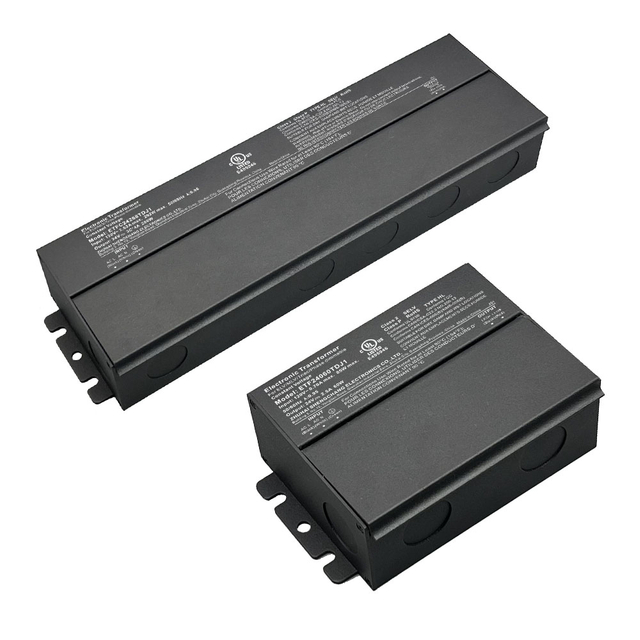
Note: For the purposes of this article, "non-dimmable LED" means a complete LED fixture/LED strip with an integrated non-dimmable driver, not individual LED chips.
Introduction
Have you ever tried dimming an LED, only to see flicker or noise? Many users face this issue during installation. It often happens when the system is not matched correctly.In this article, you will learn why this happens. We will explain how dimming systems work and why compatibility matters. You will also understand how a LED Strip Dimmable Power Supply helps create stable and reliable lighting.
What Happens When You Use a Non-Dimmable LED with a Dimmer Power Supply?
Will a Non-Dimmable LED Fixture Still Turn On with a Dimming System?
In many real installations, a non-dimmable LED will still turn on when connected to a dimmer. At full voltage, the electrical signal remains stable, so the LED behaves almost like a normal lighting load. This often leads users to assume the system is compatible, especially in LED strip applications where brightness looks normal at first glance.
Once dimming is initiated, however, performance becomes unstable and unpredictable. The dimmer modifies the incoming electrical waveform, but the integrated non-dimmable driver in the fixture lacks the specialized circuitry to decode and regulate this variable signal. Instead of smooth brightness adjustment, the system suffers from degraded performance.
Common Problems: Flickering, Buzzing, and Instability
As soon as the dimmer reduces output, electrical instability becomes more obvious. These problems are not random. They are direct results of signal mismatch between the dimmer and the LED driver.
In LED strip systems, these issues become more noticeable because longer circuits amplify inconsistencies. Light quality drops quickly, especially in environments that require smooth and continuous illumination.
Flickering at Low Brightness Levels
Reduced input from the dimmer causes unstable current regulation by the non-dimmable driver, which passes fluctuating current directly to the LED chips. Light output begins to pulse or flash, with severity increasing as brightness is turned down further.
Buzzing and Audible Noise
Internal components react to irregular electrical signals. Vibrations inside coils or capacitors create noise. Quiet environments make this issue more disturbing.
Uneven Brightness Across LED Strips
Long LED strips highlight differences in voltage distribution. Some sections appear brighter than others. This creates a poor visual effect in commercial or decorative lighting.
A properly matched LED Strip Dimmable Power Supply eliminates these issues by stabilizing output and interpreting dimming signals correctly.
Can It Damage Your LED or Power Supply?
Long-term use under incompatible conditions creates continuous stress on both the LED and the power supply. Damage does not always happen immediately, but it builds over time through repeated electrical strain.
Heat plays a critical role in this process. Unstable current flow increases energy loss, which turns into heat inside the system. Without proper regulation, this heat accelerates component degradation.
Accelerated Component Wear
Internal driver circuits experience constant stress from unstable input. Capacitors degrade faster under fluctuating voltage conditions. Overall reliability decreases over time.
Heat Accumulation and Thermal Stress
Irregular electrical flow generates excess heat. Poor ventilation worsens the situation. High temperatures reduce efficiency and shorten lifespan.
Increased Risk of System Failure
Continuous mismatch may lead to sudden failure of the LED or power supply. In some cases, the system stops working completely. Repair or replacement becomes necessary sooner than expected.
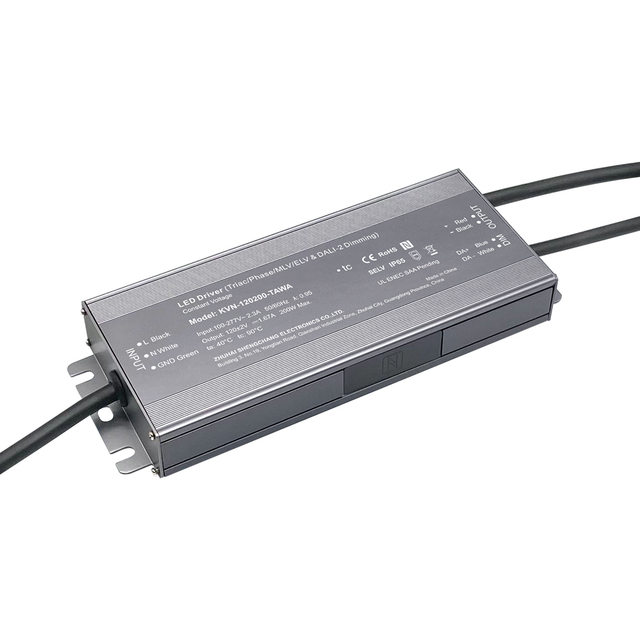
Why Non-Dimmable LED Drivers Are Incompatible with Dimming Control Systems
How Dimmers Work with LED Drivers
Dimmers do not simply reduce brightness. They actually reshape the electrical signal before it reaches the LED driver. In most common systems, especially TRIAC dimming, the waveform gets cut in phases. This changes how power is delivered over time, not just the voltage level.
A dimmable LED driver is purpose-built to interpret this variable input signal. It decodes the waveform, then regulates its output to deliver consistent current to the LED chips. In contrast, a non-dimmable LED driver is designed only for a stable AC input. Once the signal is modified by the dimmer, it cannot maintain stable output, and control of the light is lost.
Phase-Cut Signal Adjustment (TRIAC Dimming)
The dimmer cuts parts of the AC waveform. Power is delivered in pulses instead of a steady flow. This requires a driver that can interpret and smooth the signal.
Signal-Based Dimming Systems (0-10V, DALI, etc.)
These systems send independent low-voltage control signals instead of modifying the main AC power. A compatible dimmable driver translates these signals into precise output adjustments. Non-dimmable LED drivers have no control signal input, so they cannot decode or respond to these commands.
Driver as the Control Translator
A dimmable driver acts like a bridge. It converts unstable or variable input into stable LED output. Without this function, the system cannot maintain smooth lighting.
| Dimming Type | How It Works | Requirement for Stability |
| TRIAC | Cuts AC waveform | Compatible dimmable driver |
| 0-10V | Voltage signal control | Signal-responsive driver |
| DALI | Digital communication | Intelligent driver support |
Core Differences Between Dimmable and Non-Dimmable LED Drivers
The key difference lies entirely in the LED driver circuit design. Dimmable LED drivers integrate specialized control chips and dimming logic, allowing them to interpret dimming signals and adjust output to the LED chips gradually.
Non-dimmable LEDs use a simpler design. They are optimized for constant voltage or current. Once input becomes unstable, internal circuits cannot compensate. This leads to flickering or failure.
Driver Circuit Complexity
Dimmable LEDs include control chips and filtering stages. These components stabilize output under varying signals. Non-dimmable versions lack these features.
Signal Interpretation Capability
Dimmable systems can decode waveform changes or control signals. They adjust brightness step by step. Non-dimmable LEDs treat changes as noise instead of instructions.
Output Regulation Behavior
Stable systems maintain consistent current flow. Incompatible systems allow fluctuations to pass directly to the LED. This causes visible instability.
The Role of LED Strip Dimmable Power Supply in System Stability
In LED strip applications, the power supply plays a central role. It must deliver consistent voltage while also responding to dimming commands. Most LED strips rely on constant voltage systems, which require precise regulation.
A high-quality LED Strip Dimmable Power Supply ensures the system stays stable under different dimming conditions. It prevents voltage spikes, reduces flicker, and maintains even brightness across the entire strip.
Constant Voltage Output for LED Strips
LED strips depend on steady voltage, often 12V or 24V. A dimmable power supply adjusts output without breaking this stability. This keeps brightness uniform across long runs.
Load Matching and Power Balance
The power supply must match the total wattage of the LED strip. Extra capacity prevents overload and overheating. Proper matching improves long-term reliability.
Multi-Protocol Compatibility
Advanced systems support TRIAC, 0-10V, and digital dimming. This flexibility allows integration into different control environments. Manufacturers like Suretron design drivers to handle multiple dimming methods smoothly, improving system adaptability.
What Happens When the System Is Mismatched
When a non-dimmable LED is used in a dimming system, electrical conflicts begin immediately. The dimmer sends signals the LED cannot interpret. The power supply struggles to stabilize output, leading to performance issues.
These issues are not isolated. They affect the entire lighting system, including efficiency, lifespan, and user experience.
Electrical Signal Conflict
The dimmer modifies input, but the LED expects constant power. This mismatch creates unstable current flow. The system cannot reach equilibrium.
Degraded Lighting Quality
Brightness becomes inconsistent across the strip. Some areas may flicker while others remain stable. This reduces visual comfort and professional appearance.
Shortened System Lifespan
Continuous stress damages internal components. Heat builds up faster than normal operation. Over time, failure becomes more likely.
Best Practices to Avoid Dimming Issues in LED Strip Lighting Systems
Always Use a Compatible LED Strip Dimmable Power Supply
Choosing the right power supply is the foundation of a stable dimming system. Many lighting problems come from mismatched components rather than product defects. A compatible LED Strip Dimmable Power Supply ensures that signals are correctly interpreted and output remains stable across all brightness levels.
System Matching Ensures Stable Performance
Each component in the system must work together. The dimmer sends a signal, and the power supply translates it into usable output. When both are designed for the same protocol, brightness transitions remain smooth and predictable.
Avoiding Trial-and-Error Installations
Guessing compatibility often leads to repeated adjustments and wasted time. Proper planning reduces installation errors. It also prevents unnecessary replacement costs later.
Reliable Operation Across Full Dimming Range
A compatible power supply maintains consistent output from 100% down to very low brightness. This avoids sudden cutoffs or unstable light behavior.
Check Full System Compatibility Before Installation
A dimming system is not just one component. It is a combination of dimmer, driver, and LED strip. Each part must align with the others. Skipping this step often leads to flicker, noise, or failure after installation.
Dimmer + Driver + LED Strip Alignment
The dimmer type must match the driver input. The driver output must match the LED strip voltage. When all three align, the system performs consistently under different brightness levels.
Common Compatibility Mistakes to Avoid
Mixing TRIAC dimmers with incompatible drivers causes instability. Using incorrect voltage levels leads to uneven lighting. Ignoring wattage requirements can overload the system.
Pre-Installation Testing for Stability
Testing components together before final installation helps identify issues early. It reduces risk during full deployment. This approach is especially useful in large projects.
| Component | What to Check | Risk if Ignored |
| Dimmer | Dimming protocol | Signal conflict |
| Driver | Input compatibility | Flicker |
| LED strip | Voltage rating | Damage |
Plan for Stable and Smooth Dimming Performance
Good planning improves both visual quality and system durability. Smooth dimming is not just about control. It also depends on how well the system handles low brightness levels and continuous operation.
Avoiding Flicker at Low Brightness Levels
Flicker usually appears when the signal becomes weak. A high-quality power supply maintains stable output even at low levels. This ensures comfortable lighting in residential and commercial spaces.
Ensuring Consistent Light Output Across Strips
Uniform brightness is important, especially in long LED strip runs. Proper power distribution prevents dim sections or uneven light patterns. This improves overall visual appearance.
Designing for Long-Term Stability
Heat management and proper load balancing extend system life. Choosing a well-designed LED Strip Dimmable Power Supply, such as those developed by experienced manufacturers like Suretron, helps maintain consistent performance under different conditions.
Conclusion
Using a non-dimmable LED in a dimmer often causes flicker, noise, and unstable light output. Poor matching increases heat and shortens lifespan over time. Choosing a proper LED Strip Dimmable Power Supply improves control and safety. Suretron offers reliable solutions that support stable dimming and long-term performance.
FAQ
Q: Can a non-dimmable LED work with a dimmer power supply?
A: It may turn on, but without an LED Strip Dimmable Power Supply, performance becomes unstable.
Q: Why does flickering happen in dimming systems?
A: Signal mismatch causes instability, especially without a proper LED Strip Dimmable Power Supply.
Q: How to choose a dimmable power supply for LED strips?
A: Match voltage, wattage, and dimming type using a compatible LED Strip Dimmable Power Supply.
Q: Can a non-dimmable LED fixture work with a dimming system?
A: It may power on at full 100% brightness, but it will not dim smoothly, and will suffer from severe performance issues including flicker, buzzing, and premature failure when dimming is initiated. A compatible dimmable LED driver is required for stable, reliable dimming performance.
Q: What is the best way to avoid dimming issues?
A: Use a matched system with a reliable LED Strip Dimmable Power Supply.