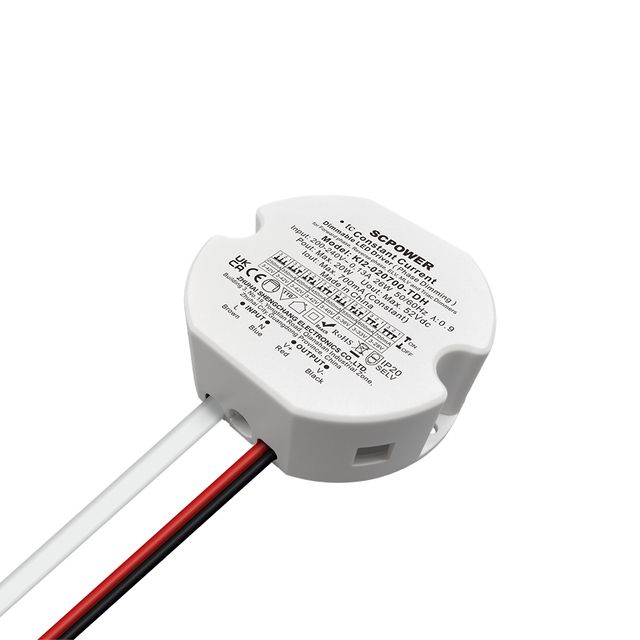
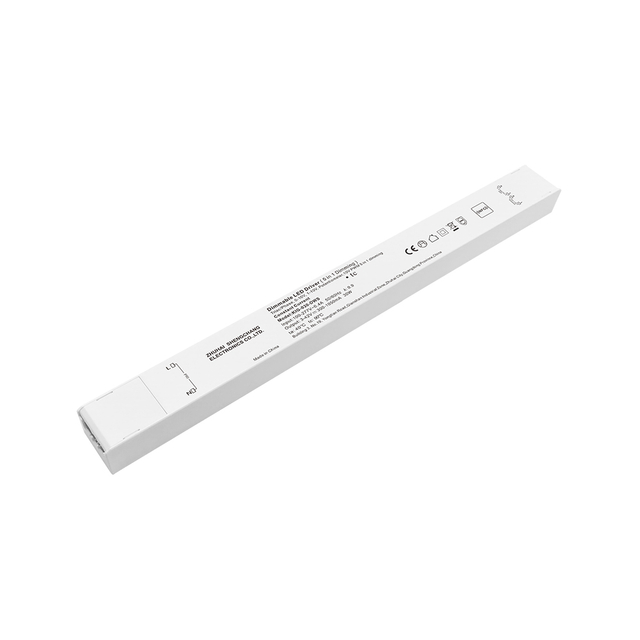
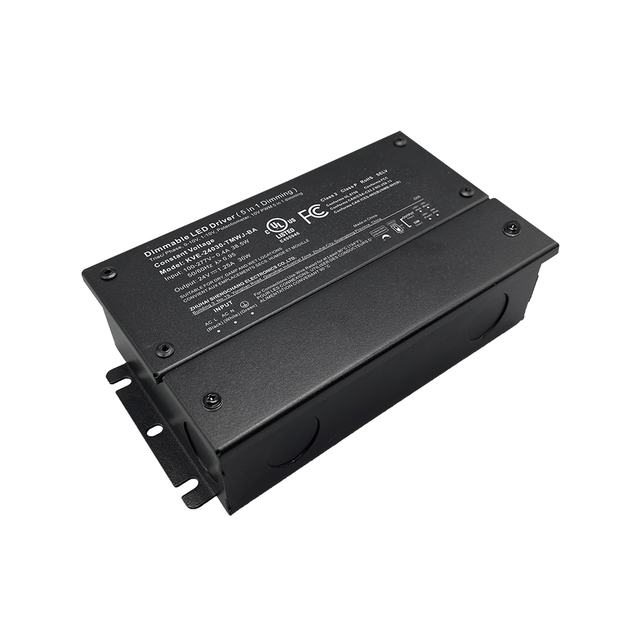
Commercial and industrial LED lighting systems are marketed for their 50,000-hour lifespans. However, this longevity depends entirely on the weakest link in the system: the driver's ability to withstand electrical transients. Specifying an inadequate surge rating leaves high-value fixtures vulnerable to catastrophic failure from grid fluctuations or lightning strikes. This results in voided warranties, unplanned maintenance labor, and compromised facility safety.
To protect capital investments, facility managers and lighting specifiers must move beyond basic wattage requirements. You must evaluate LED driver surge protection based on environmental exposure, IEEE/ANSI standards, and specific kV/kA ratings. Understanding the technical distinction between voltage thresholds and current dissipation capacity is the only way to ensure lighting infrastructure survives severe weather events and internal grid anomalies.
Application Dictates Rating: 2kV to 4kV surge levels are commonly considered for indoor and lower-exposure lighting applications.
while Many outdoor and industrial applications may benefit from higher surge withstand levels, depending on the installation environment and applicable requirements, with 10kV or higher surge levels may be appropriate for higher-exposure outdoor and infrastructure lighting applications.
kV vs. kA Distinctions: The kV value generally indicates the surge voltage level applied under a defined test condition, while the kiloamp (kA) rating defines the energy dissipation capacity and overall lifespan of the surge protection component.
Compliance and Rebates: Adhering to IEEE/ANSI C136.2 standards and verifying UL Listing or DLC Premium status ensures safety compliance and secures eligibility for utility rebates.
Silent Failures are a Risk: Without proper grounding and End-of-Life (EOL) indicators, a depleted surge protector leaves the LED driver completely unprotected without notifying maintenance teams.
Table of Contents
Toggle
How LED Driver Surge Protection Works
When a transient voltage spike hits a lighting circuit, it operates on a microsecond scale. It delivers massive amounts of destructive energy into sensitive electronic circuits long before standard thermal-magnetic circuit breakers can trip. Defining the operational threat environment for LED drivers requires looking at both external weather events and internal facility operations. Without a dedicated mitigation strategy, these transient spikes instantly bridge the microscopic gaps within the driver's integrated circuits, causing immediate carbonization and permanent failure.
What Causes Over-Voltage in LED Systems?
Multiple sources threaten your lighting infrastructure, often catching facility operators off guard. External threats are the most visible and carry the highest voltage potential. Indirect lightning strikes induce massive voltage spikes on utility lines miles away from the actual strike zone. Grid-level capacitor bank switching by utility companies also introduces severe fluctuations. When utility providers switch large substation loads to balance grid demand, the resulting transient waves travel directly down the line into connected commercial facilities.
Internal threats occur far more frequently and cause cumulative damage over time. Modern facilities house heavy machinery that generates inductive load switching. Every time a 50-horsepower compressor motor on a commercial chiller unit shuts down, the magnetic field inside the motor collapses instantly. This collapse forces a massive surge of electrical energy back into the building's distribution panel. We call this inductive kickback. Because the lighting circuits often share the same electrical phase or grounding infrastructure as these heavy loads, the voltage spike travels directly to the LED drivers. Facility managers frequently blame the utility company for blown drivers, completely unaware that their own HVAC system, industrial lathe, or hydraulic elevator is generating the destructive transients.
How Surge Protection Devices (SPDs) Function
Surge Protection Devices rely primarily on Metal Oxide Varistors (MOVs) to detect and manage transient voltage. Under normal operating conditions, an MOV acts as a highly resistive component. It allows standard AC line voltage to pass through to the driver unimpeded. However, the moment the voltage exceeds a specific design threshold, the MOV's internal resistance drops to near zero in a fraction of a nanosecond.
Many contractors mistakenly believe SPDs absorb surges like a sponge until they burst. In reality, they act as high-speed diversion valves. When the MOV detects an over-voltage event, it diverts the excess current away from the sensitive driver electronics and shunts it directly to the earth ground. By doing this, the SPD clamps the voltage down to a safe let-through level. The driver only experiences a manageable voltage, while the destructive energy dissipates safely into the ground infrastructure.
LED Driver Surge Ratings Explained: kV vs. kA
Translating technical specifications into operational capabilities requires a clear understanding of the metrics printed on the driver housing. Facility engineers must evaluate both the voltage threshold and the current capacity to accurately predict component lifespan and reliability in the field.
Understanding the kV (Kilovolt) Rating
The kilovolt (kV) rating represents the threshold of voltage protection. It defines the maximum amplitude of the transient spike the driver can withstand without suffering catastrophic failure. Think of the kV rating as the height of a flood wall. It dictates the maximum height of the wave it can block. If you specify a 6kV driver and a 10kV spike hits the line, the wave overtops the wall and floods the electronics.
This rating ties directly to clamping voltage and let-through voltage. Clamping voltage is the specific point at which the MOV activates and begins diverting current. Let-through voltage is the residual electrical pressure that actually reaches the driver's internal components after the SPD does its job. A well-engineered driver with a high kV rating features a precisely calibrated clamping voltage. This ensures the let-through voltage remains well below the destruction threshold of the internal diodes and capacitors.
Understanding the kA (Kiloamp) Rating and SPD Lifespan
While kV dictates the maximum size of the spike, the kiloamp (kA) rating defines the capacity to handle the physical energy and current of the surge. Current is the actual volume of electricity flowing through the system. The kA rating serves as the true indicator of the surge protector's physical endurance and operational lifespan.
You will find a direct correlation between kA ratings and component longevity. MOVs degrade slightly every time they shunt a surge. A higher current rating may reflect a greater surge-handling capability, depending on the SPD design and test conditions and better thermal dissipation capabilities. It withstands a significantly greater volume of cumulative, smaller power surges over time before the metal oxide material degrades, enters thermal runaway, and ultimately fails. Specifying a high kA rating ensures the driver survives years of daily inductive load switching from internal facility machinery.
How to Choose 2kV, 4kV, 6kV, or 10kV Surge Protection
Mapping specific surge ratings to appropriate deployment environments prevents both catastrophic failures and unnecessary over-specification. The physical form factor of the fixture and the electrical stability of the installation site dictate the required protection level.
Low. Vulnerable to heavy industrial load switching.
6kV
3kA
Warehouses, parking garages, sheltered outdoor
Moderate. Meets baseline standards but risks failure in open exposure.
10kV
5kA - 10kA
Streetlights, high-mast, exterior building mounts
High. Built to withstand indirect lightning and grid anomalies.
20kV+
10kA - 20kA
Heavy industrial, stadiums, coastal infrastructure
Extreme. Maximum protection for hard-to-reach installations.
2kV to 4kV: Residential and Light Commercial Indoor
Manufacturers engineer drivers rated between 2kV and 4kV strictly for climate-controlled indoor environments. You will find these standard in office buildings, retail spaces, smaller LED installations, and residential applications where the electrical grid remains relatively stable and shielded from direct weather impacts.
From a form factor perspective, these lower ratings often appear in slim, linear LED drivers. The physical space inside a troffer or architectural linear fixture is highly restricted, leaving no room for the bulky MOVs required for higher protection levels. While adequate for clean power environments, these drivers remain highly vulnerable to industrial load switching. They are completely insufficient for any outdoor application. A lower surge withstand level may provide less protection in outdoor environments exposed to stronger lightning-induced transients or grid disturbances.
6kV: Standard Commercial and Low-Exposure Outdoor
A 6kV rating represents the baseline for robust commercial applications. These drivers perform best in indoor industrial facilities, manufacturing warehouses, and sheltered outdoor fixtures such as parking garage canopies or building-mounted wall packs.
Conducting a proper risk assessment reveals the limitations of this rating. While a 6kV/3kA specification meets baseline outdoor standards for low-exposure areas, relying on it for fully exposed street lighting or high-mast applications places the driver on the edge of failure. During severe weather events, transient spikes routinely exceed 6kV. Deploying these drivers in high-risk zones guarantees a high failure rate and constant maintenance interventions.
10kV and Beyond: High-Exposure Outdoor and Heavy Industrial
Drivers equipped with 10kV to 20kV protection are mandatory for high-exposure outdoor and heavy industrial environments. This category includes municipal streetlights, high-mast highway lighting, sports stadiums, and heavy manufacturing plants with massive electrical loads.
The value proposition of a 10kV or higher rating is clear. It provides a higher level of specified surge withstand capability for applications exposed to grid transients and lightning-induced electrical disturbances. By absorbing massive transient events, these robust drivers can help reduce the risk of surge-related failures and associated maintenance requirements. and replacement frequency in hard-to-reach installations. Replacing a failed driver at the top of a 40-foot pole requires specialized equipment and significant labor hours. Investing in high kV ratings can help reduce the frequency and cost of surge-related maintenance.
LED Driver Surge Protection Standards and Compliance
Utilizing authoritative frameworks validates procurement decisions and filters out substandard components. Relying solely on manufacturer marketing claims exposes projects to significant risk. Engineers must evaluate drivers through established industry standards to ensure field reliability.
IEEE and ANSI C136.2 Guidelines
The ANSI C136 standards are commonly referenced when evaluating surge performance for roadway and area lighting equipment. The applicable surge level and test conditions depend on the specific product category, installation environment, and current edition of the applicable standard. These guidelines Surge requirements for outdoor lighting should be evaluated according to the applicable standard, product category, and exposure level. 6kV-class surge testing is commonly considered for a range of outdoor lighting applications, while higher levels may be appropriate for more demanding environments for low-exposure conditions. For high-exposure conditions, such as open parking lots and municipal roadways, Higher surge levels, such as 10kV-class testing, may be considered for high-exposure outdoor applications where greater transient protection is required protection.
These standards also dictate the specific testing waveforms used to certify the drivers. Manufacturers subject their components to a 1.2/50 μs voltage wave. This means the voltage spike reaches its absolute peak in 1.2 microseconds and decays to 50 percent of its peak value in 50 microseconds. They also use an 8/20 μs current wave for testing physical energy dissipation. These microsecond metrics matter because they replicate the exact behavior of a lightning strike. If the internal components cannot react within that 1.2-microsecond window, the transient energy bypasses the protection circuit and incinerates the driver.
UL Listing and DLC Premium Requirements
The UL 1449 Standard for Surge Protective Devices serves as the primary safety benchmark in North America. It evaluates how the component handles extreme over-voltage conditions and thermal runaway. When an MOV reaches the end of its lifespan, it can overheat rapidly. UL 1449 testing ensures that the component degrades safely, disconnecting itself from the circuit without catching fire or melting the fixture housing. Specifiers must actively verify these listings using the UL Product iQ database. Manufacturer spec sheets often list "UL Recognized" components, which is entirely different from a "UL Listed" complete assembly.
The DesignLights Consortium (DLC) dictates the performance metrics required for utility rebate programs. DLC qualification requirements cover various product performance criteria. Manufacturers and specifiers should verify the current DLC requirements applicable to the relevant product category when evaluating surge protection and overall product qualification. For rebate-driven projects, product qualification and surge performance should be evaluated against the requirements of the applicable utility program. They demand proof of longevity. Specifying a driver that meets these rigorous standards secures maximum rebate eligibility for your facility upgrade.
Surge Protection Cost vs. Long-Term Maintenance
Balancing upfront capital expenditures against long-term operational realities requires a pragmatic look at installation environments. The initial purchase price of a driver represents only a fraction of its true operational cost.
Upfront Driver Cost vs. Maintenance Labor
Consider the logistics of replacing a blown driver on a 40-foot parking lot pole. You cannot simply send a maintenance worker with a ladder. You must rent a bucket truck or articulating boom lift. You have to secure the work area with cones and potentially hire traffic control personnel if the pole sits near a public roadway. You pay hourly union rates for at least two field technicians.
A single maintenaReplacing a failed driver on a high-mounted outdoor fixture can involve labor, lift equipment, site access, and traffic-control costs, making maintenance considerably more expensive than the driver itself. The cost difference between a standard 4kV driver and a robust 10kV driver is usually less than $20 at the procurement stage. Specifying the highest possible surge rating for hard-to-reach applications For difficult-to-access installations, selecting an appropriate surge protection level can be a cost-effective way to reduce the potential impact of surge-related failures. against exorbitant future labor costs.
Built-in vs. External Surge Protectors
Lighting designers must evaluate the trade-off between integrated driver protection and modular, external SPDs. When you specify a driver with built-in protection, the manufacturer solders the MOV directly onto the internal printed circuit board. This saves physical space inside tight architectural fixtures and lowers the initial cost. However, when that internal MOV absorbs its maximum capacity and fails, you lose the entire driver. You have to throw away a perfectly good power supply just because the internal protection component did its job.
External SPDs solve this problem. You wire these modular blocks in series or parallel ahead of the driver input leads. While they require more physical space inside the fixture housing, they offer a massive maintenance advantage. When a massive surge depletes the external MOV, technicians simply swap out the modular SPD block. This leaves the original, expensive LED driver intact and operational.
LED Surge Protection Installation Risks and Best Practices
Even the highest-rated surge protection components prove useless if you ignore the physical realities of the installation. Addressing implementation risks at the ground level ensures system survival.
The Critical Dependency on Proper Grounding
Even a high surge withstand rating cannot compensate for an improperly designed or installed electrical grounding and bonding system. Poor grounding can significantly reduce the effectiveness of surge protection. Surge protection devices do not magically erase electrical energy. They act as diversion valves. The diverted surge requires a low-impedance path to earth. If the grounding conductor is loose, heavily corroded, or improperly bonded at the pole base, the transient voltage hits a dead end. It immediately reflects back up the line, bypassing the varistor entirely and destroying the driver circuitry. Field technicians must verify earth ground impedance with a megohmmeter during the initial installation phase.
Mandating End-of-Life (EOL) Indicators
Silent failures present a severe risk to lighting infrastructure. Because MOVs degrade over time as they absorb multiple smaller surges, they eventually reach a state where they can no longer offer protection. If the SPD fails silently, the system remains operational but completely unprotected. The next transient spike will destroy the driver.
To mitigate this, For applications where maintenance visibility is important, an SPD with visual or remote status indication can help maintenance teams identify protection components that require replacement. This typically takes the form of visual LED indicators on the driver housing or automated failure reporting contacts tied into the facility's building management system. Mandating EOL indicators allows maintenance teams to replace depleted protectors proactively, preventing secondary driver blowouts.
Conclusion
Audit your facility's historical lighting failure rates to identify specific zones prone to transient voltage damage.
Review all current and future LED driver specification sheets to verify exact kV and kA ratings match the physical installation environment.
Consult with your electrical engineering team to specify modular, external SPDs for high-risk outdoor zones like parking lots and roof mounts.
Mandate visual End-of-Life (EOL) indicators on all procurement orders to prevent silent failures from leaving your system unprotected.
Test and verify the earth ground impedance at every fixture pole base before signing off on the final electrical installation.
Beyond surge protection selection, choosing a well-engineered LED driver platform is equally important for long-term lighting system reliability. Zhuhai Shengchang Electronics, founded in 2009, develops and manufactures intelligent dimmable LED drivers covering 8W–1800W and multiple control protocols for commercial, industrial, outdoor, and residential lighting applications.
FAQ
Q: What is the minimum surge protection rating for outdoor LED drivers?
A: According to IEEE/ANSI standards, the absolute minimum for outdoor LED drivers is 6kV/3kA for low-exposure areas. However, 10kV/10kA is the industry standard for high-exposure applications like streetlights and parking lots.
Q: Can a power surge destroy an LED driver?
A: Yes. Power surges and transient voltage spikes can instantly destroy the sensitive electronic components inside an LED driver, leading to immediate fixture failure and voided warranties if the surge exceeds the driver's kV rating.
Q: What is the difference between kV and kA in surge protection?
A: The kV (kilovolt) rating measures the maximum voltage spike the protector can block. The kA (kiloamp) rating measures the amount of electrical current the device can safely dissipate, which directly impacts how long the surge protector will last before failing.
Q: Do indoor LED lights need surge protection?
A: Yes, indoor LED lights require surge protection, typically between 2kV and 4kV. While they are safe from lightning, they are still vulnerable to internal surges caused by HVAC systems, elevators, and heavy machinery turning on and off.
Q: How do I know if my LED driver surge protector has failed?
A: Many modern, certified surge protection devices feature an End-of-Life (EOL) indicator, such as a small LED light that turns off when the protector is depleted. Without an indicator, a failed protector is only discovered when the LED driver itself fails during the next surge.
Q: Does a 10kV rating mean the LED driver will never fail?
A: No. A 10kV rating significantly reduces the risk of failure from transients, but surge protectors degrade over time as they absorb multiple smaller surges. Additionally, if the fixture lacks proper electrical grounding, the surge protection cannot function.