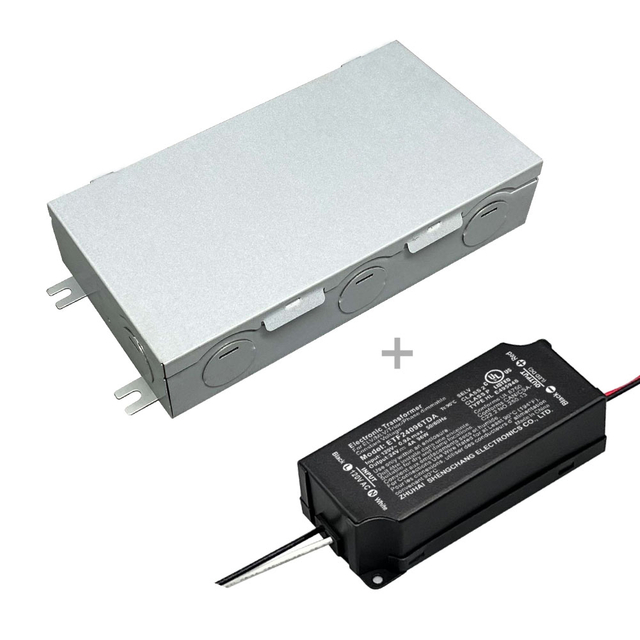
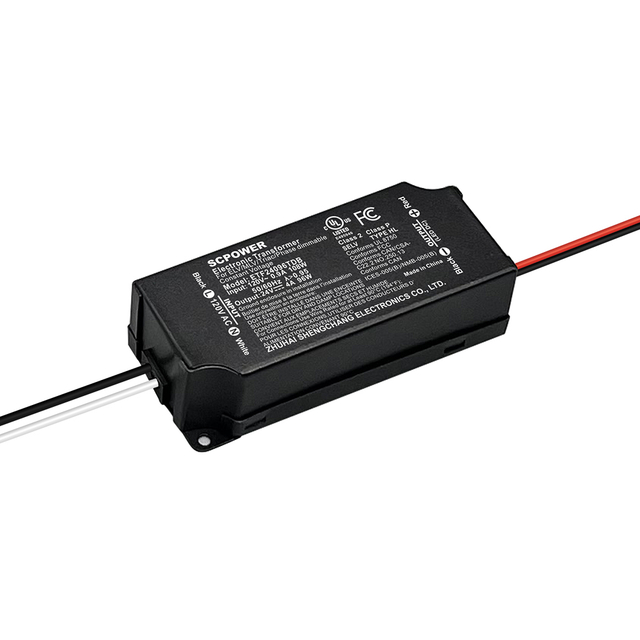
Choosing the right LED driver (often also called an LED power supply) is one of those decisions that looks simple—until a project starts flickering, overheating, or failing inspections. Many buyers search for “LED transformer,” and that term is still widely used. But in modern LED lighting, the device that converts mains power to the correct low-voltage output is typically a driver/power supply, not a traditional magnetic transformer.
Whether you’re specifying lighting for a home remodel, a retail chain rollout, a museum exhibit, or an outdoor landscape project, selecting the correct LED driver is essential for stable brightness, dimming performance, safety compliance, and long-term reliability. Let’s unpack how LED drivers work, what types exist, and how to choose the best one for your application.
Understanding LED Drivers (and Why People Still Say “Transformer”)
In everyday language, “transformer” often means “the box that steps voltage down.” In classic AC lighting systems, that was literally true—magnetic transformers were used to reduce voltage for low-voltage lamps. LED lighting is different. Most LED systems need more than a voltage change: they typically require AC-to-DC conversion (rectification), output regulation, protection, and—very often—dimming control. That’s why the industry more accurately uses LED driver or LED power supply.
What is an LED driver / LED power supply?
An LED driver is a power conversion device that takes input from the mains (commonly 120VAC or 230VAC, depending on region) and provides the correct output voltage or current required by an LED load.
In practice, LED drivers usually fall into two categories:
Constant Voltage (CV) LED power supply: outputs a fixed DC voltage, typically 12V DC or 24V DC.
Constant Current (CC) LED driver: outputs a fixed current (mA or A), while the voltage varies within a rated range to match the LED load.
Why LED drivers matter (more than most people think)
LEDs are sensitive electronic loads. If the driver type doesn’t match the LED product design—or if dimming and environment requirements are ignored—you can see issues that are expensive to diagnose on site: flicker at low dim levels, audible buzzing, random shutoffs caused by protection triggering, inconsistent brightness across fixtures, or accelerated component aging due to heat.
This is why selecting the right driver is not simply “pick 12V or 24V.” It’s about matching electrical requirements + dimming method + environment + safety margins.

Types of LED Drivers: Constant Voltage vs Constant Current (with B2B Use Cases)
This is the most misunderstood part of driver selection. The correct driver type depends on the LED product structure (strip, module, downlight, panel, floodlight, etc.) and how the LEDs are internally wired.
Constant Voltage (CV) LED Power Supply — Best for LED Strips & Modules
A constant voltage power supply provides a steady DC output such as 12V DC or 24V DC. LED strips and many LED modules include their own current-limiting components, so the supply’s job is to hold voltage stable and deliver sufficient power.
Typical products powered by CV supplies include LED strip/tape, LED modules for signage, low-voltage decorative lighting, and some cabinet lighting systems. In real-world projects, CV dominates wherever strips dominate—especially indoors.
From a B-end perspective, CV power supplies are frequently specified for interior linear lighting in shopping malls, hotels, restaurants, and museums, where strips are used for cove lighting, shelf lighting, display accents, and architectural details. They’re also common in office environments (reception areas, indirect lighting features), education (classrooms and corridors), healthcare (corridors and patient spaces where stable, comfortable light matters), and residential (under-cabinet lighting, wardrobes, ceiling coves). In short: CV is everywhere indoors because strip-based lighting is everywhere indoors.
Constant Current (CC) LED Driver — Best for Downlights, Panels, and High-Power Fixtures
A constant current driver outputs a fixed current (for example 350mA, 700mA, 1050mA). The driver automatically adjusts its voltage (within its rated range) to match the LED load. This is common in luminaires where LED chips are arranged in series and require precise current regulation for consistent brightness and safe operation.
To make CC selection easier, it helps to split it into two practical groups:
A) Small/Medium-Power Constant Current — Downlights & Panel Lights (Mostly Indoor)
Small and medium-power CC drivers are commonly used for downlights and panel lights, including some track heads and compact luminaires. You’ll see these heavily in indoor B-end scenarios such as malls, hotels, restaurants, museums, as well as offices, schools, hospitals, and residential ceiling lighting. These environments typically care about visual comfort, long operating hours, reduced maintenance, and consistent brightness across many fixtures—exactly what constant current regulation is designed to deliver.
B) High-Power Constant Current — Outdoor & High-Performance Lighting (Mostly Outdoor)
High-power CC drivers are used in floodlights, street/roadway luminaires, landscape and architectural lighting, stage lighting, stadium/field lighting, and horticulture grow lights. These are often part of large-scale outdoor lighting and architectural lighting projects, where the electrical and environmental stresses are higher.
Compared with indoor projects, outdoor applications place much stronger emphasis on weather resistance, waterproofing, temperature swings, and especially surge/lightning protection. If a driver can’t handle spikes or harsh conditions, maintenance costs rise quickly—so high-power CC drivers are often specified with stronger protective designs and higher environmental robustness.
Quick comparison table (CV vs CC)
Here’s a clean way to decide what you need before you even look at brands or prices:
Driver Type | Output | Best For | Most Common Scenes |
Constant Voltage (CV) | 12V/24V DC fixed voltage | LED strips, LED tape, LED modules | Mostly indoor: commercial interiors, offices, schools, hospitals, homes |
Constant Current (CC) | Fixed current, variable voltage | Downlights, panels, high-power luminaires | Indoor (downlights/panels) + Outdoor (flood/street/landscape/stadium/grow) |
A practical rule: If the LED product is sold as a “12V/24V strip/module,” it usually needs CV. If it’s a fixture like a downlight/panel/floodlight, it often needs CC. Always verify the luminaire datasheet.
Key Specs to Check Before Choosing an LED Driver
A driver that “kind of works” is often worse than one that clearly doesn’t—because it creates intermittent problems that are expensive to troubleshoot. These are the key specs to validate.
1) Output voltage (for CV drivers)
For CV power supplies, match the output voltage exactly. A 12V strip needs 12V; a 24V strip needs 24V. Using the wrong voltage can cause dim light at best and damage at worst.
From a system design perspective, 24V is often preferred for longer runs because it reduces current for the same power and can help reduce voltage drop. But the only correct choice is the one that matches the LED product requirement.
2) Output current / power capacity (and the 20% headroom rule)
Drivers are rated by watts (W) and/or amps (A). For constant voltage:
Calculate total LED load, then add headroom. A widely used engineering rule is 20% spare capacity to reduce stress and overheating.
Example: If you have a 24V LED strip project totaling 80W, select at least a 100W driver.
You can show this calculation as: $$ P{total}=\sum P{fixtures} $$
Then choose: $$ P{driver}\ge 1.2\times P{total} $$
3) Dimming compatibility (TRIAC / ELV / MLV / 0–10V)
Dimming is one of the most common failure points in LED projects. Your driver must match the dimming system used on site.
TRIAC dimming (phase-cut) is widely used in residential and retrofit projects. Terms like ELV and MLV often appear because dimmers behave differently (leading-edge vs trailing-edge), and drivers must be designed to cooperate with those waveforms. In commercial controls ecosystems, 0–10V is also common, and advanced projects may use DALI/DMX.
The practical takeaway is simple: choose a driver that is explicitly rated for your dimming method and—ideally—validated with mainstream dimmer models. This is how you avoid low-level flicker, buzzing, and limited dimming range.
4) Minimum load behavior (important for dimming stability)
Many dimmable drivers perform best when loaded within a stated window, often around 20–100% of rated load. If the driver is drastically under-loaded, the dimmer-driver interaction can become unstable, leading to flicker, dropout, or “pop-on” behavior.
When the project wattage is small, it’s often smarter to choose a lower-watt driver model rather than oversizing significantly.
5) Environment and safety ratings
Where the driver lives matters. Indoor cabinet spaces may only need basic protection, but damp or wet locations usually require drivers rated accordingly and installed per code (often inside an enclosure). Outdoor installations typically require stronger durability expectations, and architectural/outdoor projects often demand better surge protection due to harsher grid and weather conditions.
Key factors to verify include dry/damp/wet suitability, IP rating expectations (IP20 is typical for indoor), operating temperature range, and safety certifications (such as UL/cUL and Class 2 where applicable).
Step-by-Step Guide: Selecting the Right LED Driver for Your LED Lights
This comprehensive workflow is designed for both DIY enthusiasts and B2B specifications, ensuring you select the most suitable LED driver for your lighting needs.
Step 1: Determine LED Load Requirements (CV or CC)
Start by examining the LED product label or datasheet, which provides crucial information about the type of driver required:
Constant Voltage (CV): If the label indicates 12V DC or 24V DC, you will likely need a constant voltage driver. This type of driver maintains a steady voltage output, making it ideal for LED strips and modules that operate at a fixed voltage.
Constant Current (CC): If the label specifies a current (in mA) along with a voltage range, you will need a constant current driver. This driver type delivers a consistent current to the LED, which is essential for LED products that require specific current levels for optimal performance.
By confirming whether your LED product requires constant voltage or constant current, you can ensure compatibility and prevent potential damage to your lighting system.
Step 2: Select Output Voltage (CV) or Output Current Range (CC)
Once you've determined the type of driver needed, proceed to select the appropriate output specifications:
For Constant Voltage (CV) applications, choose either 12V or 24V exactly as required by your LED product. It’s vital to match the output voltage precisely to avoid overloading or underpowering the LEDs.
For Constant Current (CC) applications, select a driver that matches the required mA rating. Ensure that the driver can operate within the compatible voltage window specified in the LED datasheet. This guarantees that the LEDs receive the correct current without exceeding their limits.
This step is crucial because using the wrong output can lead to reduced performance, flickering, or even permanent damage to the LEDs.
Step 3: Calculate Total Wattage and Add Headroom
Next, you need to calculate the total wattage required for your LED setup:
Sum all loads: Add together the wattage of all LED fixtures you plan to use. This total will help you determine the power requirements for your driver.
Include a 20% spare capacity: To enhance reliability and thermal performance, it’s advisable to include a 20% headroom. This extra capacity helps the driver operate more efficiently, reduces the risk of overheating, and minimizes the chances of nuisance failures over time.
Calculating total load and incorporating a margin is essential for ensuring that the driver can handle the demands of your LED system without straining.
Step 4: Choose Dimming Method and Verify Compatibility
If your project requires dimming capabilities, it’s vital to choose the right dimming method and verify compatibility:
Dimming Method: Determine whether you need wall dimmer control. If so, confirm that the driver supports TRIAC/ELV/MLV if you are using phase-cut dimmers. These types of dimmers are commonly used in residential and commercial applications.
Dimmer Compatibility: Check the compatibility of the dimmer model with the chosen driver. Many drivers provide a list of compatible dimmers, including popular brands such as Lutron. Ensuring compatibility will allow for smooth dimming performance and prevent flickering or other issues.
Deciding on the need for dimming is crucial, especially in environments where lighting levels may need to be adjusted for different activities or moods.
Step 5: Assess the Installation Environment
The final step involves evaluating the installation environment to ensure that the selected driver is suitable for the conditions it will face:
Indoor Cabinet: If the installation is in a dry indoor cabinet, an IP20 rating is typically sufficient. This rating indicates protection against solid objects larger than 12mm, making it suitable for most indoor applications.
Damp Location: For installations in damp areas (like bathrooms or kitchens), choose damp-rated products and ensure they are installed in appropriate enclosures to prevent moisture ingress.
Wet/Outdoor: If the installation is in a wet or outdoor environment, use drivers rated for wet locations. These drivers should have a suitable IP rating (such as IP65 or higher) to protect against water exposure. Additionally, follow proper wiring practices, including the use of weatherproof connectors and enclosures.
Finally, always review local codes and regulations regarding electrical installations to ensure compliance and safety.
Common Questions About LED Drivers (and “Transformers”)
Can I use a regular transformer for LED lights?
Using a regular transformer for LED lights is sometimes possible, but it comes with risks and is often not the best choice. Traditional transformers are designed for halogen loads and may not provide the necessary regulation, protection, or dimming capabilities that LEDs require. For optimal performance and longevity, it’s generally advisable to use a purpose-built LED driver or LED power supply that is specifically matched to your LED product. These drivers are engineered to handle the unique electrical characteristics of LED lighting, ensuring safe and efficient operation.
What happens if I choose the wrong LED driver?
Selecting the wrong LED driver can lead to several common issues, including:
Flickering: This is particularly noticeable when dimming, as the driver may not properly regulate the current.
Overheating: Both the driver and the LED load may overheat, potentially leading to damage or failure.
Audible Noise: Incorrect drivers can produce buzzing or humming sounds, which can be distracting in quiet environments.
Shortened LED Lifespan: Using an incompatible driver can stress the LEDs, leading to premature failure.
Driver Shutdown: Many drivers have overload and short-circuit protection features that may trigger shutdowns if the driver is not appropriately matched to the load.
Additionally, using the wrong driver can cause inconsistent brightness across fixtures, which is particularly problematic in commercial installations where uniform lighting is crucial for aesthetics and functionality.
Do I need 12V or 24V?
Both 12V and 24V are common voltage options for LED lighting systems. Many projects tend to prefer 24V for longer runs because it allows for a lower current for the same wattage, which helps reduce voltage drop over longer distances. However, the most important factor is to always match the voltage requirement specified by your LED product. Using the correct voltage ensures optimal performance and prevents damage to the LEDs.
How do I size a driver for LED strips?
To properly size a driver for LED strips, follow these steps:
Calculate Total Strip Wattage: Determine the total wattage by multiplying the length of the strip by the watts per meter or foot. For example, if you have a 5-meter strip rated at 10 watts per meter, the total wattage would be 5 meters×10 watts/meter=50 watts5meters×10watts/meter=50watts.
Add 20% Headroom: To ensure reliable operation and allow for any variations in power consumption, add a 20% margin to the total wattage. In this case, 50 watts×1.2=60 watts50watts×1.2=60watts.
Choose a Constant Voltage (CV) Driver: Select a CV driver that matches the required voltage (12V or 24V) and has an adequate wattage rating (in this example, at least 60 watts).
Confirm Dimming Compatibility: If your project requires dimming, ensure that the chosen driver is compatible with your dimming method (e.g., TRIAC, ELV, or other types of dimmers).
By following these steps, you can effectively size your LED driver to ensure optimal performance and longevity of your LED strips.
Matching Driver Features to Real Projects (Practical Examples)
Matching Driver Features to Real Projects (Practical Examples)
Selecting the right LED driver is essential for the success of any lighting project. Below are practical examples that illustrate how to match driver features to specific project requirements.
Example A: Hotel Cove Lighting (Indoor, Commercial)
LED Product: 24V LED strip
Requirement: Smooth dimming from wall control
Recommendation: A 24V constant voltage TRIAC-dimmable LED power supply, sized with appropriate headroom
In hospitality projects like hotel cove lighting, the quality of the dimming experience is crucial for creating the right ambiance. Hotels prioritize smooth dimming and consistent lighting across different areas. Since LED strips typically operate at 24V, a constant voltage (CV) driver is the standard choice. The recommended TRIAC-dimmable driver ensures compatibility with wall dimmers, allowing guests to adjust lighting levels easily. Sizing the driver with proper headroom guarantees stable brightness, quiet operation, and reliable dimming performance across various rooms.
Example B: Office ceiling grid with downlights and panels (indoor)
LED Product: Downlights and panels with constant current (CC) requirements
Requirement: Stable brightness, long lifetime, low maintenance
Recommendation: Constant current LED drivers matched to each luminaire’s current rating
In an office environment with ceiling grids featuring downlights and panels, maintaining uniform brightness is essential for productivity and comfort. These fixtures often require constant current drivers to ensure precise current regulation, which is vital for consistent output and reliability. By selecting drivers that match the current specifications of each luminaire, the project can achieve predictable performance over extended operating hours, minimizing maintenance needs and extending the lifespan of the lighting system.
Example C: Outdoor facade floodlighting (outdoor brightening project)
LED Product: High-power luminaires
Requirement: Waterproofing and surge immunity
Recommendation: High-power constant current drivers with robust surge protection and appropriate IP/environment rating
Outdoor lighting projects, such as facade floodlighting or roadway illumination, often involve high-power luminaires that must withstand harsh environmental conditions. These drivers need to be capable of enduring electrical surges and exposure to weather elements. Therefore, a high-power constant current driver with strong surge protection features and a suitable IP rating is essential. This ensures that the lighting system remains operational and reliable despite the challenges posed by outdoor settings, where durability is of utmost importance.
Checklist: How to Choose the Right LED Driver (Fast Decision Tool)
Use this checklist to ensure you select the right LED driver before placing an order or releasing a Bill of Materials (BOM):
Load Type: Determine if you are working with an LED strip/module (requiring constant voltage, CV) or a luminaire (requiring constant current, CC).
Output Voltage: Identify the required output—either 12V DC or 24V DC for constant voltage (CV), or the rated mA for constant current (CC).
Power Sizing: Calculate the total wattage needed and add 20% headroom to ensure reliable operation and accommodate any fluctuations.
Dimming Compatibility: Confirm whether you need TRIAC, ELV, MLV, or 0–10V dimming. Ensure that the chosen driver is compatible with your dimming method.
Low-Load Behavior: Verify that the driver can operate stably across the expected load range, especially for low-load scenarios.
Environmental Conditions: Assess the installation environment and confirm the required ratings—dry, damp, or wet—along with any necessary IP ratings and enclosure requirements.
Safety and Compliance: Ensure that the driver meets relevant safety standards, such as UL/cUL, and complies with Class 2 requirements where applicable, in addition to any specific project standards.
Before purchasing, confirm the LED load type, output requirement, total wattage with headroom, dimming method compatibility, and environmental rating. Most selection mistakes happen when one of these gets skipped—especially dimming compatibility and under-load behavior on small projects.
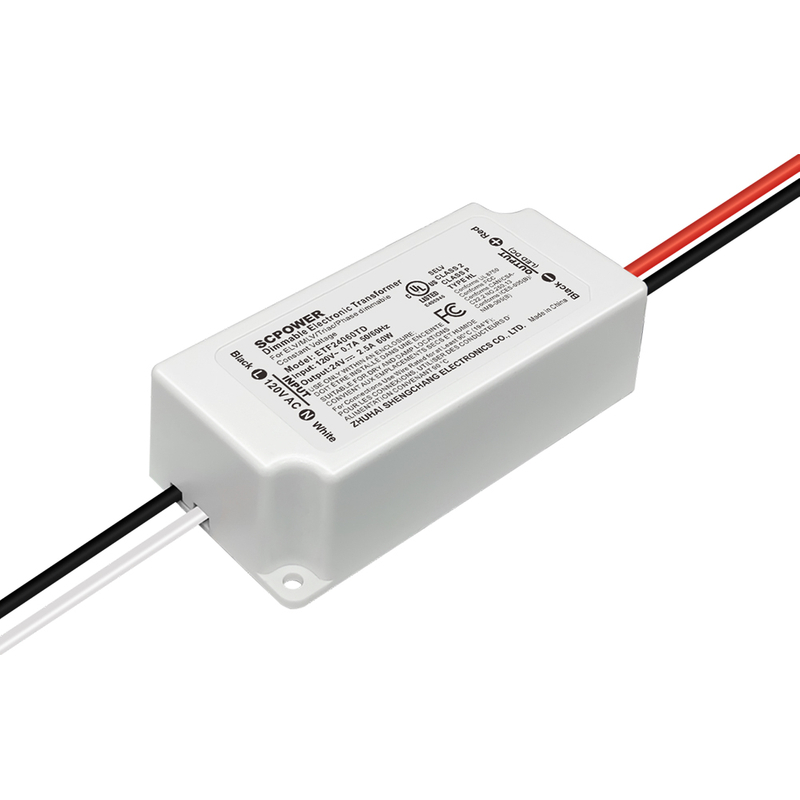
Conclusion
Selecting the right LED driver / LED power supply is the foundation of a reliable LED lighting system. The best choice is always the one that matches your LED load type (constant voltage vs constant current), fits your control strategy (like TRIAC dimming), and is rated for the real-world installation environment.
When you treat the driver as a core electrical component—not an accessory—you reduce flicker complaints, avoid overheating, pass inspections more smoothly, and protect the lighting investment for years.
Explore Suretron's range of transformers to find the perfect solution for your LED lighting requirements.