From the phone in your pocket to the streetlights guiding you home, LED technology is everywhere. What was once a humble indicator light inside early electronic devices has evolved into the global standard for illumination, reshaping how we light our homes, workplaces, and cities. But this transformation didn’t happen overnight. The rise of the light-emitting diode (LED) is the result of decades of scientific breakthroughs, aggressive energy policies, and a collective shift toward sustainability.
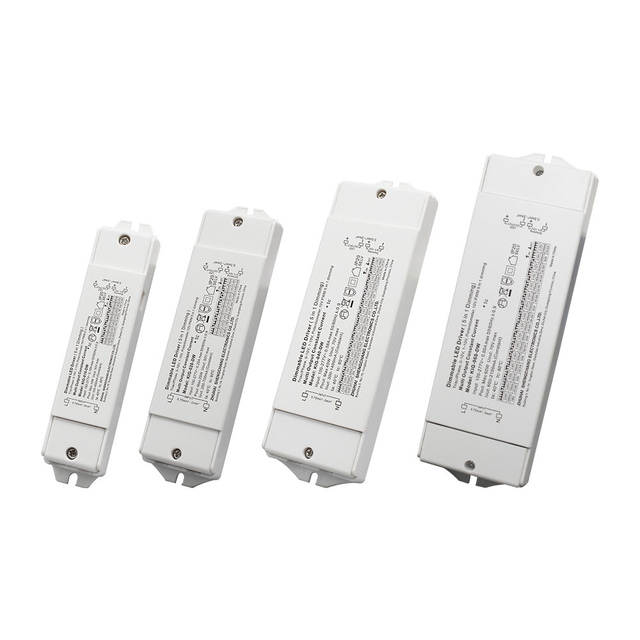
Yet one often overlooked part of this story is the LED driver—the electronic power module that makes modern LED lighting possible. LEDs cannot run directly on household AC power; they require a stable, controlled DC current. Without LED drivers to convert, regulate, and protect LEDs from voltage fluctuations, the technology could never have reached mainstream adoption. In many ways, the LED driver is the “silent enabler” that allowed LED lighting to move from laboratory prototypes to reliable, everyday products.
So, how did LED lights become so popular? The answer lies in a combination of remarkable energy efficiency, exceptionally long lifespan, falling manufacturing costs—and the development of advanced LED drivers that turned LEDs into practical, safe, and durable lighting solutions. This post traces the complete history of LED lighting, from its earliest scientific discoveries to its rise as the dominant lighting technology, and explores the key innovations that brought LEDs into homes around the world.
What Are LED Lights? A Simple Explanation
Before we dive into the history, let’s cover the basics. An LED, or light-emitting diode, is a semiconductor device. Unlike traditional incandescent bulbs that heat a filament until it glows, or fluorescent lamps that use gas and mercury vapor, LEDs create light through a process called electroluminescence.
How LEDs Work (for beginners)
At its core, an LED is made of special materials that, when an electric current passes through them, release energy in the form of photons—the basic particles of light. By changing the materials used in the semiconductor, manufacturers can produce light of different colors. This simple yet powerful mechanism is the foundation of LED technology’s efficiency and versatility.
Key Advantages That Drove LED Popularity
LEDs didn’t just become popular by chance; they offered a suite of benefits that older technologies couldn’t match.
Energy Savings: LEDs consume significantly less electricity. For example, they use up to 85% less energy than incandescent bulbs and about two-thirds of the power of fluorescent lights, leading to major savings on electricity bills.
Longer Lifespan: A quality LED bulb can last 25,000 to 50,000 hours or more. That’s 25 times longer than a traditional incandescent bulb, drastically reducing the need for replacements and maintenance.
Durability: Because they are solid-state devices with no fragile filaments or glass tubes, LEDs are incredibly durable and resistant to shock, vibrations, and impact.
Low Heat Emission: LEDs produce very little heat. In contrast, incandescent bulbs release about 90% of their energy as heat, making them inefficient and a potential fire hazard.
Environmental Benefits: Their energy efficiency reduces greenhouse gas emissions, and they contain no toxic materials like the mercury found in fluorescent bulbs, making them a more sustainable choice.
Early History of LED Lighting — Where It All Began
While many think of LEDs as a 21st-century invention, their origins trace back more than 100 years.
The 1907 Discovery — Electroluminescence
The story begins in 1907 with British radio engineer Henry Joseph Round, who first observed that a silicon carbide crystal could produce a faint yellowish light when a current was applied. This phenomenon, known as electroluminescence, was the first recorded instance of the principle behind LED technology. A few years later, in the 1920s, Russian inventor Oleg Losev independently studied and published theories on these “light-emitting diodes,” though his work went largely unnoticed.
The First Visible LED (1962)
It wasn’t until 1962 that the first practical, visible-spectrum LED was invented. Nick Holonyak Jr., a consulting scientist at General Electric, developed a red LED. While not bright enough for general lighting, this invention marked a pivotal moment. Holonyak, often called the “father of the light-emitting diode,” knew he was onto something big, predicting that LEDs would one day replace the incandescent bulb.
Early LEDs in Electronics and Indicators (1960s–1980s)
For the next two decades, LEDs remained expensive and were primarily used as indicator lights in electronic devices. In 1964, IBM used them on circuit boards in early computers. By 1968, Hewlett-Packard (HP) began incorporating LEDs into its calculators, and by the 1970s, they were common in digital watches, traffic signals, and other electronic displays. During this time, engineers also developed yellow (1972) and green LEDs, expanding the color palette but still falling short of producing the white light needed for illumination.
Technological Breakthroughs That Made LED Lights Popular
The transition from a simple red indicator to a bright white lightbulb required multiple scientific and engineering breakthroughs—especially in semiconductor materials, efficiency, and supporting power electronics.
Invention of the Blue LED (1990s)
The single biggest obstacle to creating white light was the absence of a high-brightness blue LED. Without blue, mixing the primary colors (red, green, and blue) to create white light was impossible. After decades of global research, a major breakthrough finally arrived in the early 1990s when Japanese scientists Isamu Akasaki, Hiroshi Amano, and Shuji Nakamura developed a high-quality blue LED using Gallium Nitride (GaN). Their pioneering work earned the 2014 Nobel Prize in Physics and opened the door to the first commercially viable white LEDs.
Improvements in Light Output and Efficiency
With the blue LED unlocked, researchers rapidly improved light output and efficiency. Early LEDs produced few lumens per watt, but advances in semiconductor engineering, thermal management, and device packaging dramatically boosted performance—eventually surpassing incandescent, halogen, and fluorescent lighting.
These increasingly efficient LED chips required equally efficient constant-current LED drivers to achieve their full performance and lifespan, which in turn accelerated demand for high-quality LED driver technology.
Advances in Materials and Manufacturing
The development and mass production of GaN-based semiconductors changed everything. As manufacturing techniques matured and wafer production expanded, LED output increased while costs dropped sharply. LEDs shifted from niche specialty components to affordable, mainstream lighting solutions.
Again, the need for stable, low-ripple, high-efficiency LED drivers grew alongside LED chip advancements, ensuring LEDs could operate safely and reliably under real-world electrical conditions.
Key Factors Behind the Rise of LED Lights
A series of converging trends in the 2000s and 2010s catapulted LEDs from a promising technology to the undisputed king of lighting.
1. Government Policies & Energy Regulations
Governments around the world played a huge role in the rise of LEDs. Recognizing the immense energy-saving potential, many countries introduced legislation to phase out inefficient incandescent bulbs. The United States, the European Union, and China, among others, implemented mandates and energy standards that encouraged consumers and businesses to switch to more efficient alternatives like LEDs.
2. Sharp Drop in LED Prices
The most significant driver of LED adoption was the rapid and steep decline in their cost. Thanks to advancements in semiconductor manufacturing and economies of scale, the price of an LED bulb plummeted by over 90% between 2010 and 2020. What was once a luxury item costing nearly $100 per bulb became an affordable household staple.
3. Growing Demand for Energy-Saving Technologies
As energy costs rose, homeowners and businesses alike began searching for ways to reduce their electricity consumption. LEDs, with their promise of significant savings on utility bills, became an obvious choice for residential, commercial, and industrial applications.
4. Environmental Awareness (Carbon Reduction)
A growing global consciousness about climate change and the need to reduce carbon footprints further fueled the LED boom. Sustainability movements and the rise of eco-friendly building codes (like LEED certification) made LEDs the preferred choice for environmentally responsible construction and retrofitting projects.
5. Performance Advantages Over Traditional Lighting
LEDs simply outperform their predecessors in almost every metric. They last longer, are more durable, offer better color accuracy (CRI), and turn on instantly without the warm-up time required by fluorescent lamps. These tangible benefits made the switch an easy decision for most.
Timeline of LED Adoption — How They Became Mainstream
2000s — LED Enters Consumer Markets: The first white LED bulbs for residential use became commercially available in the early 2000s, but they were prohibitively expensive, costing between $80 and $100.
2010–2015 — Rapid Global Adoption: This was the tipping point. Prices fell sharply, and quality improved. Households began replacing their old incandescents with LED bulbs, and major retailers started stocking them widely.
2015–2020 — LED Dominates Street Lighting, Commercial Buildings: Municipalities and large corporations undertook massive retrofitting projects, replacing millions of old streetlights and commercial fixtures with energy-efficient LEDs, leading to huge cost savings and energy reductions.
2020–Today — Smart LEDs & IoT Lighting Ecosystem: LEDs are now at the heart of the smart home revolution. Connected via Wi-Fi and integrated with IoT platforms, smart LEDs offer customizable colors, automated schedules, and voice control, fundamentally changing our relationship with light.
Use Cases That Accelerated LED Popularity
The versatility of LEDs allowed them to penetrate virtually every market imaginable.
Home Lighting: From standard bulbs to recessed lighting and decorative strips, LEDs offer homeowners unprecedented flexibility and efficiency.
Offices & Commercial Buildings: The long lifespan and low maintenance of LEDs make them ideal for large-scale commercial spaces where replacing bulbs is a major operational cost.
Streetlights & Public Infrastructure: LEDs provide brighter, more uniform light for public spaces, improving safety while saving cities millions in energy and maintenance costs.
Automotive Lighting: LEDs are now standard in cars for headlights, taillights, and interior lighting due to their durability, instant-on capability, and design freedom.
Consumer Electronics: LEDs are the backbone of modern displays, from the screen on your smartphone and TV (including QLED and OLED technologies) to the backlighting on your laptop.
Why LED Lights Became the Preferred Choice
Summarizing the key drivers, LEDs won the lighting war for several clear reasons:
Energy Efficiency and Cost Savings: No other technology offers the same level of energy savings, directly translating to lower bills.
Safety Improvements vs. Fluorescent/Incandescent: LEDs run much cooler, reducing fire risk, and contain no mercury, making them safer for homes and the environment.
Longer Lifespan with Lower Maintenance: The “fit and forget” nature of LEDs is a massive advantage, especially in hard-to-reach places or large-scale installations.
Better Light Quality & Design Flexibility: With high color rendering and the ability to be made in almost any shape or size, LEDs give designers creative freedom that was previously impossible.
Challenges LED Lights Overcame Before Becoming Popular
The path to dominance wasn't without its hurdles. Early LEDs had several limitations that needed to be addressed:
High Initial Costs: For years, the price was the biggest barrier for the average consumer.
Limited Brightness in Early Models: The first white LEDs were not bright enough to adequately light a room.
Poor Color Rendering in Early White LEDs: Early models often produced a harsh, bluish light and struggled to render colors accurately.
Heat Management Issues: Although LEDs generate less heat than incandescent lamps, early high-power LEDs struggled with local heat accumulation around the semiconductor junction. Insufficient thermal design often caused rapid lumen depreciation or premature failure. Over time, improvements in LED package design, heat sinks, and—critically—the development of high-efficiency LED drivers with optimized thermal control helped solve this problem.
Modern constant-current drivers, such as those found in advanced products from manufacturers like Suretron, stabilize operating current, reduce thermal stress, and provide protections such as over-temperature shutdown. These innovations made high-power LEDs far more reliable in real-world applications.
Decades of innovation were required to overcome these engineering challenges and pave the way for the widespread adoption of LED lighting.
How LED Lights Became Popular Around the World
The global adoption of LEDs was driven by region-specific strategies:
United States: A combination of federal regulations, like the Energy Independence and Security Act, and utility rebate programs incentivized consumers to make the switch.
Europe: The EU’s Energy Efficiency Directive aggressively phased out inefficient bulbs, pushing the market toward LEDs.
China: The government heavily subsidized manufacturing, turning the country into the world’s largest producer of LEDs and driving down global prices.
Japan & Korea: As technology innovation powerhouses, companies in these nations were at the forefront of developing high-quality, high-efficiency LED components.
The Critical Role of the LED Driver in Modern Lighting
While global policy and manufacturing scale accelerated LED adoption, one technological component quietly enabled LEDs to function as reliable everyday lighting: the LED driver. LEDs cannot operate directly on household AC power; they require a constant and precisely regulated current to achieve stable brightness, long lifespan, and safe operation. Modern LED drivers convert fluctuating AC input into clean, low-ripple DC output, protecting LEDs from voltage spikes, thermal stress, and current surges.
As LEDs grew brighter and more efficient, the demands placed on LED drivers also increased. Advanced constant-current drivers—with features like power-factor correction, dimming compatibility (0-10V, DALI, Triac), thermal protection, and low electromagnetic interference—became essential for delivering consistent performance in residential, commercial, and industrial lighting. In this sense, LED drivers were not just supporting components but foundational technologies that allowed LEDs to transition from simple indicator lamps to the dominant global lighting standard.
Future Trends — What’s Next After LED Popularity?
The LED revolution is far from over. The future of lighting is poised to become even more integrated, intelligent, and human-focused.
Smart Lighting & Home Automation: Expect deeper integration with IoT ecosystems, making lighting a core part of a fully automated home.
Human-Centric Lighting: This emerging field uses tunable LEDs to mimic the natural progression of daylight, which can help regulate our circadian rhythms, improve sleep, and boost productivity.
Micro-LED & Mini-LED Technologies: These next-generation display technologies promise even better contrast, brightness, and energy efficiency for TVs, monitors, and mobile devices.
Integration With Solar & Renewable Energy: The low power draw of LEDs makes them a perfect partner for off-grid solar power systems, bringing light to remote communities around the world.
FAQs
Why did LED lights suddenly become popular?
Their popularity seemed sudden but was the result of a “perfect storm” in the 2010s: the invention of the blue LED, a massive drop in manufacturing costs, government phase-outs of incandescent bulbs, and growing public demand for energy efficiency.
When did LED lights become mainstream?
LED lights started becoming mainstream for residential use between 2010 and 2015, when their prices became competitive with older technologies.
Are LEDs actually better than other bulbs?
Yes. In almost every measurable way—energy efficiency, lifespan, durability, and environmental impact—LEDs are superior to incandescent, halogen, and fluorescent bulbs.
How long do LED lights really last?
A high-quality LED light can last between 25,000 and 50,000 hours. If used for an average of three hours per day, that’s over 22 years.
Will LEDs be replaced by new technology?
For the foreseeable future, LEDs will likely remain the dominant lighting technology. Future advancements will probably focus on making LEDs smarter and more efficient rather than replacing them entirely.
The Bright Future Forged by LEDs
The story of how LED lights became popular is a testament to human ingenuity and the power of innovation to solve global challenges. From a faint glow in a lab to the cornerstone of modern lighting, LEDs have delivered on their promise of a brighter, more efficient, and sustainable future. They have saved trillions of watt-hours of energy, prevented millions of tons of carbon from entering the atmosphere, and given us a level of control over our environments that was once science fiction.
The journey isn’t over. As technology continues to evolve, the humble LED will find new ways to enrich our lives, improve our well-being, and light up our world.
SURETRON
As LEDs became more advanced, the demand for high-efficiency, high-stability LED drivers grew just as quickly. At SURETRON, we specialize in the design and manufacturing of professional LED driver solutions trusted worldwide. With a modern production facility, a strong R&D team, and strict quality systems, SURETRON delivers LED drivers with long lifespan, high conversion efficiency, and full safety protection, ensuring LEDs perform at their best in every application.
If you’re looking for reliable constant-current or constant-voltage LED driver solutions for residential, commercial, or industrial lighting, we’re here to help. Speak with our LED driver experts for customized solutions!