An LED lighting system is more than just the light you see. It’s a precisely engineered collection of components working in harmony to deliver efficient, reliable, and high-quality illumination. Understanding what these parts are and how they interact is crucial for anyone specifying, purchasing, or managing lighting for commercial, industrial, or architectural projects. When each component is chosen correctly, the system performs optimally, lasts longer, and delivers significant energy savings.
This guide breaks down the essential components of a modern LED lighting system. From the tiny chip that emits light to the sophisticated controls that manage it, you will gain a clear understanding of what makes this technology so powerful. We’ll explore why the LED driver has become such a critical focus, how thermal management protects your investment, and what makes a fixture robust and reliable. By the end, you’ll be equipped with the knowledge to evaluate LED systems and make informed decisions that ensure performance and long-term value.
Understanding an LED Lighting System
At its core, an LED lighting system is a sophisticated electronic device designed to convert electrical power into controlled, high-quality light. Unlike traditional incandescent or fluorescent lights that use heated filaments or energized gases, LED systems rely on solid-state lighting (SSL) technology.
This process begins when electrical energy is supplied to the system. The power is converted and regulated before reaching the heart of the system: the Light Emitting Diodes (LEDs). When energized, these semiconductors release photons, creating visible light. This raw light is then shaped, directed, and diffused by optical components to create the desired illumination pattern. Simultaneously, a thermal management system works to draw heat away from the sensitive electronics, and a housing protects everything from the external environment. This intricate coordination is what gives LED lighting its significant advantages over traditional technologies, including unparalleled energy efficiency, exceptionally long lifespan, and advanced control capabilities.
Core Components of an LED Lighting System
A complete LED lighting system, or luminaire, is an ecosystem of interdependent parts. The quality and compatibility of each component directly impact the system’s overall performance, efficiency, and longevity.
1. LED Light Source (LED Chips / Modules)
The LED itself is the foundational component of any system. It is a semiconductor diode that emits light when an electrical current passes through it. These individual diodes are typically assembled onto a circuit board to create an LED module, which serves as the engine of the luminaire.
What Are LED Chips?
LED chips, also known as Surface Mounted Devices (SMDs), are the primary light-emitting components. Modern luminaires use these chips instead of older, “through-hole” LEDs because they are smaller, more efficient, and can be packed closely together to achieve high brightness levels. Common types of LED chips used in lighting systems include:
SMD (Surface Mounted Device): These are individual chips soldered directly onto a Printed Circuit Board (PCB). They are versatile and widely used in everything from downlights to linear fixtures.
COB (Chip on Board): A COB LED consists of multiple LED chips mounted directly onto a single substrate to form one module. This design creates a dense, powerful light source with a uniform appearance, reducing glare and improving thermal performance.
CSP (Chip Scale Package): CSP LEDs are nearly the same size as the LED chip itself, with no traditional submount. This compact design offers high-intensity light output and improved heat dissipation, making it ideal for applications requiring high lumen density.
LED Module Performance Factors
The performance of an LED module is defined by several key metrics:
Lumen Output: This measures the total amount of visible light produced. It is often expressed in lumens per watt (lm/W), which indicates the module’s efficiency.
Color Temperature & CRI: Color Temperature, measured in Kelvin (K), describes the perceived warmth or coolness of the light (e.g., 2700K is warm white, 5000K is cool white). The Color Rendering Index (CRI) measures how accurately the light reveals the true colors of objects on a scale of 0 to 100, with higher numbers indicating better color fidelity.
Heat Generation: While LEDs are highly efficient, they still produce heat as a byproduct of the light-emission process. This heat is generated within the semiconductor junction and must be managed effectively to prevent performance degradation.
2. LED Driver (Power Supply Unit)
If the LED chip is the engine, the LED driver is the brain and central nervous system. It is a crucial power supply unit that ensures the LEDs operate correctly, efficiently, and safely. The growing importance of high-quality drivers is reflected in the market’s expansion, as organizations recognize their direct impact on reliability and efficiency.
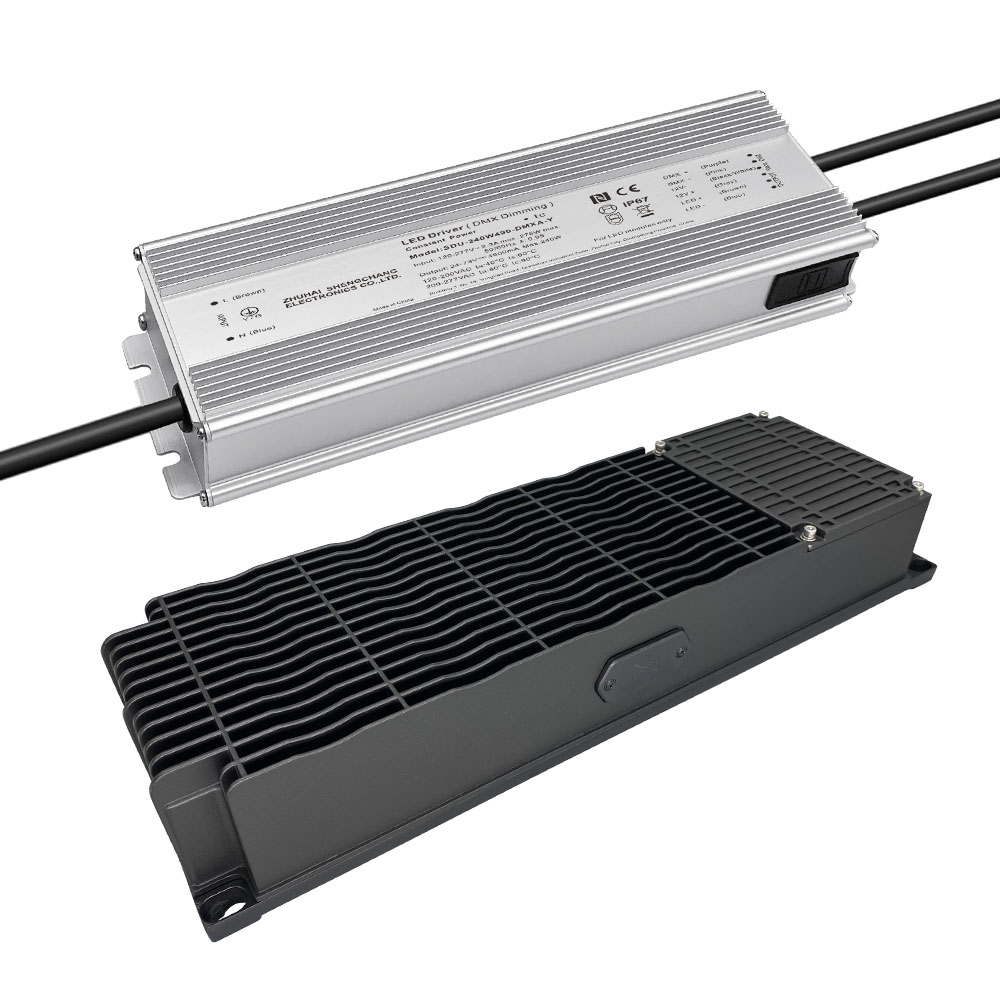
What Is an LED Driver?
An LED driver is an electronic device that converts incoming AC power (typically high voltage, like 120V or 277V) into the stable, low-voltage DC power that LEDs require. Its functions are threefold:
Power Conversion: It transforms high-voltage AC into low-voltage DC.
Current Regulation: It provides a constant, regulated electrical current to the LEDs, which is essential for stable light output.
Protection: It shields the LEDs from potentially damaging fluctuations in voltage and current from the mains supply. A failing driver is the primary cause of common LED issues like flickering, buzzing, or premature dimming.
Types of LED Drivers
LED drivers are categorized based on their output method and functionality.
Constant Current Drivers
These drivers are designed to deliver a fixed output current (e.g., 350mA, 700mA) while allowing the voltage to vary depending on the load of the LED module. They are the standard for most high-power luminaires because they provide precise control over the current, ensuring consistent brightness and optimal performance.
Constant Voltage Drivers
These drivers provide a fixed output voltage (e.g., 12V or 24V) and are typically used for applications where multiple LED modules are wired in parallel, such as LED strip lighting or landscape lights. In these systems, current regulation is handled by resistors integrated into the LED strips themselves.
Dimming capabilities are a major advantage of LED lighting. Drivers enable this through various protocols:
Triac Dimming: A common, simple form of phase-cut dimming compatible with many legacy incandescent dimmers.
0–10V Dimming: A robust, analog protocol widely used in commercial lighting, where a low-voltage signal from 0V to 10V controls the light output from 0% to 100%.
DALI-2 / D4i: A digital, two-way communication protocol offering precise control, monitoring, and interoperability between devices from different manufacturers. D4i is an extension focused on standardizing power and data for intra-luminaire components.
DMX512: A fast, digital protocol traditionally used for theatrical and architectural stage lighting that requires dynamic color and scene changes.
Wireless: Protocols like Bluetooth Mesh, Zigbee, WiFi, and Casambi allow for control via smartphones, tablets, or dedicated wireless switches, eliminating the need for new control wiring.
Why the LED Driver Is Critical
The driver is often the component that determines the overall lifespan and reliability of an LED luminaire. A high-quality driver ensures efficiency, extends the life of the LEDs by protecting them from electrical stress, and guarantees flicker-free operation. Furthermore, drivers must carry certifications like UL, CE, and ENEC to prove they meet regional safety and performance standards.
3. Optics (Lenses, Reflectors, Diffusers)
Optics are responsible for shaping and directing the light produced by the LED module. Without effective optical control, the light would be scattered, inefficient, and potentially create uncomfortable glare.
Role of Optics
The primary functions of optical components are to:
Control the Beam Angle: Shape the light into a specific pattern, such as a narrow spotlight or a wide floodlight.
Improve Uniformity: Distribute light evenly across a surface to eliminate dark spots and hotspots.
Reduce Glare: Shield the bright LED source from direct view to enhance visual comfort.
Types of Optics
Lenses: Made from materials like polycarbonate (PC) or acrylic (PMMA), lenses use refraction to direct light precisely. Total Internal Reflection (TIR) lenses are particularly efficient, capturing and controlling almost all light from the source.
Reflectors: These use a reflective surface to bounce light in a desired direction. They are often used to create wider beam spreads or shape light in downlights and high-bay fixtures.
Diffusers: A diffuser is a translucent cover (often made of frosted PC or PMMA) placed over the LEDs. Its purpose is to soften the light, spread it evenly, and reduce glare, creating a more comfortable and visually appealing illumination.
4. Heat Sink (Thermal Management System)
Effective thermal management is arguably the most critical factor in ensuring an LED’s long-term performance and lifespan.
Why Thermal Management Matters
LEDs generate heat deep within the semiconductor junction. If this heat is not drawn away effectively, the junction temperature will rise, leading to several negative consequences:
Reduced Light Output: Higher temperatures cause LEDs to become less efficient, producing less light for the same amount of energy.
Color Shift: The color of the light can change as temperatures fluctuate.
Reduced Lifespan: Prolonged exposure to high temperatures accelerates the degradation of the LED materials, causing a permanent and irreversible decline in light output (lumen depreciation) and shortening the fixture’s useful life.
Types of Heat Sinks
A heat sink is a passive heat exchanger that transfers thermal energy from the LED module to the surrounding air.
Aluminum Housing: In many luminaires, the fixture’s metal housing is designed to double as the heat sink. Aluminum is the most common material due to its excellent thermal conductivity and relatively low cost.
Fin Designs: Many heat sinks feature fins or other complex geometries. These fins increase the surface area exposed to the air, allowing heat to dissipate more quickly through convection.
Passive vs. Active Cooling: The vast majority of LED luminaires use passive cooling (natural convection). Active cooling, which involves fans or other mechanical devices, is typically reserved for highly specialized, high-power applications.
5. PCB and Fixture Housing (Structural Components)
These components provide the foundation and protection for the entire LED system.
PCB (Printed Circuit Board)
The LED chips are mounted onto a PCB. In LED lighting, Metal Core PCBs (MCPCBs) are often used. These boards have a metal base (usually aluminum) that provides a direct path for heat to travel from the LEDs to the heat sink, combining electrical connectivity with thermal management. FR4 is another common PCB material, though it is less thermally conductive.
Fixture Housing
The housing serves several vital functions:
Protection: It shields the internal components from dust, moisture, and physical impact. Its durability is often defined by an IP (Ingress Protection) rating, which indicates its level of sealing against solids and liquids.
Structural Support: It provides a robust frame for mounting all the components securely.
Safety: It encloses the electrical components and ensures the fixture can be installed safely.
6. Control System (Smart Lighting Integration)
Modern LED lighting systems are rarely standalone devices. They are often integrated into larger control systems to unlock significant energy savings and create dynamic, human-centric environments.
Why Controls Are Essential
Lighting controls enable automation, energy savings through dimming and occupancy sensing, and precise management of light levels for specific tasks or moods. They transform a static light source into an intelligent, responsive system.
Control Components
Sensors: Motion sensors (PIR or microwave) detect occupancy to turn lights on or off automatically. Daylight or ambient light sensors measure the amount of natural light in a space and adjust the electric lighting accordingly, a strategy known as daylight harvesting.
Smart Lighting Protocols: As mentioned with drivers, protocols like DALI-2, D4i, Zigbee, and Bluetooth Mesh allow fixtures to communicate with each other and with central control systems. D4i, in particular, standardizes power and data communication between the driver and sensors within a single luminaire.
How Controls Work With LED Drivers
The control system sends a signal to the dimmable LED driver, which then interprets the command and adjusts the current flowing to the LEDs. This integration allows for everything from simple dimming to complex, synchronized scenes across an entire building.
7. Connectors, Wiring & Protection Components
Though often overlooked, these small components are essential for safety, reliability, and ease of installation.
Connectors: Waterproof and quick-connect terminals ensure secure, reliable electrical connections, especially in outdoor or damp environments.
Wiring: The system uses specific low-voltage and high-voltage cables rated for their application.
Protection Components: Surge Protection Devices (SPDs) shield the luminaire from voltage spikes. Fuses, proper grounding, and insulation provide additional layers of electrical safety.
How LED Lighting System Components Work Together
The operation of an LED lighting system is a seamless, sequential flow:
Power Conversion: The LED driver takes in AC power and converts it to low-voltage DC.
Current Regulation: The driver supplies a stable, precisely controlled current to the LED module.
Light Output: The LEDs emit light when energized.
Thermal Control: As the LEDs produce light, the heat sink continuously draws thermal energy away from the chips.
Optical Shaping: Lenses, reflectors, and diffusers take the raw light and shape it into a controlled, useful, and comfortable beam.
Smart Control: A control system sends signals to the driver, allowing for dimming, color tuning, or automated responses based on sensor input.
The quality and synergy between these components define the system’s success. A high-efficiency LED module is wasted if paired with an inefficient driver. A long-lasting LED chip will fail prematurely if its heat sink is inadequate. True performance comes from a well-designed system where every part is optimized to work in concert.
FAQs
What is the most important component in an LED lighting system?
While every component is necessary, the LED driver and the thermal management system (heat sink) have the most significant impact on the luminaire’s lifespan and reliability. A high-quality driver protects the LEDs from electrical stress, and an effective heat sink protects them from thermal degradation. The failure of either of these often leads to the failure of the entire fixture.
Why do LED lights require a driver?
LEDs are low-voltage, DC-powered devices. Since standard electrical outlets provide high-voltage AC power, a driver is needed to convert the power to the correct format. The driver also regulates the current, which prevents the LEDs from drawing too much power and burning out due to a phenomenon called thermal runaway.
What is the difference between constant current and constant voltage?
A constant current driver delivers a fixed amperage (mA) and varies the voltage to meet the LED’s needs. This is the preferred method for powering high-power LEDs. A constant voltage driver delivers a fixed voltage (e.g., 12V or 24V) and is used for LED products like strip lights that have their own current-limiting resistors.
How does a heat sink extend LED lifespan?
Heat is the primary enemy of an LED. A heat sink is made of a thermally conductive material, like aluminum, that pulls heat away from the sensitive LED chip and dissipates it into the air. By keeping the LED cool, the heat sink dramatically slows the rate of lumen depreciation and prevents premature failure, thereby extending its useful life.
What control system should I choose for smart lighting?
The choice depends on your needs. For simple dimming in a single room, a 0–10V or wireless Bluetooth system may suffice. For a large commercial building requiring advanced control, monitoring, and flexibility, a digital system like DALI-2 is often the best choice.
The Foundation of Modern Lighting
A high-performance LED lighting system is a testament to thoughtful engineering, where every component plays a vital role. From the light-emitting chip to the protective housing, each part contributes to the fixture’s overall efficiency, reliability, and quality of light.
As you evaluate lighting solutions, look beyond the basic specifications. Pay close attention to the quality of the LED driver, the design of the thermal management system, and the choice of optics. These are the components that separate an average product from an investment-grade luminaire that will deliver exceptional performance for years to come. By understanding how these parts work together, you can confidently choose lighting systems that are not only powerful and efficient but also built to last.


