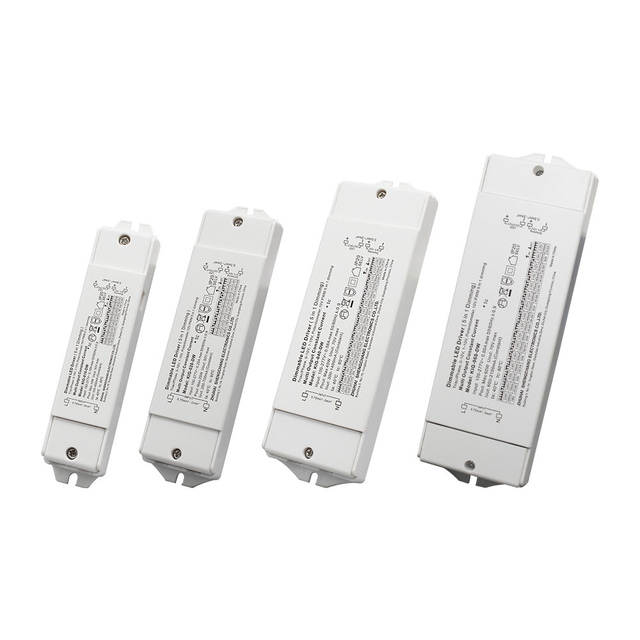
The global lighting market is undergoing a seismic shift. Traditional light sources are rapidly being replaced by more efficient, longer-lasting LED technology. At the core of this revolution is a component that often goes unnoticed: the LED driver. Acting as the “engine” of every LED light, the driver is a specialized power supply that ensures optimal performance, reliability, and functionality.
This report provides a comprehensive analysis of the global LED drivers market, exploring the key trends, growth drivers, and challenges shaping the industry. Based on recent market data, the global market for LED drivers was valued at approximately US$31.3 billion in 2024 and is projected to surge to US$98.1 billion by 2030, growing at an impressive compound annual growth rate (CAGR) of 21%.
This explosive growth is not just a byproduct of the LED transition; it’s a testament to the driver’s critical role in unlocking advanced features like dimming, color control, and smart connectivity. As businesses and consumers demand more from their lighting systems, the innovation and strategic importance of the LED driver market will only continue to grow. This guide explores the market dynamics, technological advancements, and future opportunities that define this essential industry.
1. Understanding the Lighting Market Transformation
The transition from legacy lighting like incandescent and fluorescent bulbs to solid-state lighting (SSL) has been one of the most significant technological shifts in recent decades. This transformation is driven by a global push for energy efficiency, lower maintenance costs, and superior performance, with the LED driver playing a central role in enabling these benefits.
1.1 The Shift Toward Energy-Efficient LED Lighting
Governments worldwide have been instrumental in accelerating the adoption of LED lighting. Through stringent regulations and energy-efficiency mandates, many countries have phased out inefficient lighting technologies. For example, some jurisdictions have prohibited certain types of high-intensity discharge (HID) bulbs, compelling industries to upgrade to more sustainable LED alternatives.
The global adoption of LED lighting spans residential, commercial, and industrial sectors. Consumers are drawn to the lower energy bills and longer lifespan of LED bulbs, while businesses benefit from reduced operational costs and improved light quality. The compelling return on investment (ROI) from low maintenance and consistent brightness makes LED technology an easy choice for large-scale installations. At the heart of this efficiency is the LED driver, which precisely regulates power to maximize light output while minimizing energy consumption, significantly extending the lifespan of the LED fixture.
1.2 Key Drivers of LED Lighting Growth
Several interconnected factors are propelling the growth of the LED lighting market and, by extension, the LED drivers market.
Smart City and Infrastructure Investments: Governments are heavily investing in smart city programs to create technologically advanced and sustainable urban environments. Smart lighting is a cornerstone of these projects, utilizing IoT-based systems for streetlights, public spaces, and buildings. These systems rely on intelligent LED drivers to enable remote control, monitoring, and energy management.
Declining LED Component Prices: As manufacturing processes have matured and economies of scale have been achieved, the cost of LED components has steadily decreased. This has made LED lighting more accessible to a broader market, accelerating its adoption and fueling demand for the drivers needed to power them.
Technological Advancements: Innovation in LED driver technology continues to unlock new possibilities. Advancements like DALI-2 (Digital Addressable Lighting Interface), wireless protocols, and more efficient constant-current drivers allow for sophisticated control systems. These next-generation drivers can manage everything from simple dimming to complex, programmable lighting scenes, making them indispensable for modern lighting designs.
2. What Is an LED Driver?
An LED driver is a fundamental component in any LED lighting system. It functions as a self-contained power supply that converts incoming AC power into the regulated DC power that LEDs require to operate. Without a properly matched driver, an LED would be susceptible to overheating, flickering, or premature failure.
Types of LED Drivers in the LED Drivers Market
The market offers a diverse range of LED drivers designed for different applications and functionalities.
External vs. Integrated Drivers: External drivers are separate units that connect to the LED fixture, offering flexibility in design and easier replacement. Integrated (or on-board) drivers are built directly into the lamp or luminaire, creating a more compact, all-in-one solution.
Dimmable vs. Non-Dimmable Models: While non-dimmable drivers offer a simple on/off function, dimmable drivers provide adjustable brightness levels. The demand for dimmable options is growing as users seek greater control over their lighting environments.
Smart/Connected LED Driver Technologies: The rise of the Internet of Things (IoT) has led to the development of smart drivers. These advanced components integrate wireless communication protocols like DALI-2, Bluetooth, and Zigbee, enabling them to connect to building management systems, smartphones, and other smart devices for remote control, automation, and data collection.
3. LED Driver Applications Across the Lighting Market
LED drivers are integral to virtually every LED lighting application, with specific performance requirements varying by sector.
3.1 Residential LED Lighting with LED Drivers
In the residential sector, LED drivers are found in everyday products like A-type bulbs, light panels, and under-cabinet strips. Consumers are increasingly seeking energy savings and enhanced features like dimming and smart home compatibility, driving demand for more sophisticated, compact drivers.
3.2 Commercial and Industrial LED Lighting
Commercial and industrial settings, such as warehouses, offices, and retail stores, demand high-performance, reliable, and efficient lighting. LED drivers in these applications must withstand harsh conditions, operate for long hours, and meet strict safety standards. The focus here is on maximizing energy savings and minimizing maintenance, making robust and long-lasting drivers essential.
3.3 Outdoor and Architectural LED Lighting
Outdoor applications like streetlights, tunnels, and sports stadiums require rugged, weatherproof LED drivers capable of delivering high-power output consistently. The global push for smart city initiatives has significantly boosted this segment, with smart drivers enabling intelligent, connected streetlight networks that can be monitored and controlled remotely to save energy and improve public safety.
4. Global Market Analysis From the Strategic Business Report
The global LED drivers market is characterized by robust growth, intense competition, and significant regional variations. The market’s expansion is closely tied to the broader adoption of LED technology and the increasing demand for smart, connected lighting systems.
4.1 Market Size, Shares, and Forecasts
Recent reports confirm the market’s strong trajectory. Valued at around US$31.3 billion in 2024, the LED drivers market is forecast to reach US$98.1 billion by 2030. This growth is underpinned by the dominance of constant-current drivers and the rising popularity of smart drivers integrated with IoT technologies. Among luminaire types, Type A-Lamps represent a significant segment, projected to reach US$35.5 billion by 2030.
4.2 Regional Analysis
The market landscape varies significantly by region, influenced by local regulations, economic development, and manufacturing capabilities.
4.3 North America
The North American market, estimated at US$5.1 billion in 2024, is driven by stringent energy efficiency standards, infrastructure renovation projects, and the growing adoption of smart lighting systems in commercial and residential buildings.
4.4 Europe
Europe is a key market, propelled by the European Union’s strong commitment to carbon neutrality and energy efficiency. Countries like Germany, the UK, and France are leading the adoption of advanced LED lighting solutions, creating strong demand for high-performance and DALI-enabled drivers.
4.5 Asia-Pacific
The Asia-Pacific region is the powerhouse of the global LED drivers market, both as a consumer and a producer. It is projected to exhibit the fastest growth, with China forecast to reach a market size of US$27.2 billion by 2030. Rapid urbanization, massive infrastructure projects, and a dominant manufacturing base make this region the epicenter of the industry.
4.6 Middle East, Africa, and Latin America
These emerging markets show significant growth potential. Large-scale infrastructure investments, particularly smart city projects in the Middle East, are driving the adoption of energy-efficient LED lighting and creating new opportunities for driver manufacturers.
5. Competitive Landscape in the LED Driver Market
The LED drivers market is highly competitive and fragmented, featuring a mix of global semiconductor giants, specialized lighting component manufacturers, and regional players.
5.1 Leading Manufacturers and Brands
Key companies in the market include Signify, OSRAM, Infineon Technologies, Delta Electronics, Suretron Cree, and Mean Well Enterprises. These industry leaders differentiate themselves through innovation, extensive product portfolios, global distribution networks, and adherence to international quality and safety certifications.
5.2 Technology & Innovation Trends
Competition is increasingly centered on technological advancement. Key innovation trends include:
Miniaturization: Creating smaller, more compact drivers to fit into sleek, modern luminaire designs.
Intelligent Power Management: Developing drivers that are more efficient and offer advanced control features.
Wireless Integration: Incorporating protocols like Bluetooth Mesh and Zigbee for seamless connectivity in smart lighting ecosystems.
High-Efficiency Drivers: Designing ultra-high-efficiency drivers to meet growing demand for energy conservation, especially for high-power applications.
6. Supply Chain, Trade Flow & Tariff Impacts
The global nature of the electronics industry makes the LED driver market susceptible to supply chain disruptions, trade policies, and tariffs.
6.1 Analysis of Global Supply Chain
China has historically dominated the manufacturing of LED drivers, serving as a global production hub. However, in response to trade tensions and a desire for supply chain diversification, manufacturers are increasingly looking to alternative production sites in Southeast Asia, such as Vietnam. This shift aims to mitigate risks and stabilize supply chains.
6.2 Trade, Duties & Regulatory Pressures
Tariffs imposed between major economic blocs, such as the US and China, have impacted the cost and availability of LED drivers. Manufacturers and distributors must navigate these complex trade dynamics. Furthermore, compliance with a web of international and regional certifications—including UL for North America, CE for Europe, and ENEC for European electrical products—is mandatory and adds another layer of complexity for market players.
7. Key Challenges Facing the LED Drivers Market
Despite its strong growth outlook, the market faces several challenges that could temper its trajectory.
Price Pressure and Raw Material Volatility: Intense competition exerts constant downward pressure on prices, while fluctuations in the cost of raw materials like semiconductors and capacitors can squeeze profit margins.
Safety Standards and Certification Requirements: Meeting diverse and stringent international safety standards is costly and time-consuming, creating barriers to entry for smaller manufacturers.
Compatibility Issues in Smart Lighting Ecosystems: A lack of standardization in smart lighting protocols can lead to compatibility issues between drivers, luminaires, and control systems, creating frustration for end-users.
Counterfeiting and Low-Quality Production: The market is plagued by low-quality and counterfeit drivers that fail to meet safety and performance standards, which can damage brand reputations and pose safety risks.
8. Opportunities in the Future Lighting Market
The future of the LED drivers market is bright, with several high-growth areas poised to create new opportunities.
Expansion of Smart & Connected LED Lighting: The continued growth of IoT will fuel demand for AI-enabled, cloud-connected LED drivers that can be integrated into smart building management systems.
Growth in Niche Applications: Emerging sectors like horticultural lighting, where specific light spectrums are needed to optimize plant growth, and electric vehicle (EV) charging infrastructure are creating new markets for specialized LED drivers.
IoT-Integrated LED Drivers: The next generation of drivers will do more than just power lights. They will act as data-gathering nodes in an IoT network, providing insights into energy usage, occupancy, and environmental conditions to enable truly intelligent building management.
9. Frequently Asked Questions (FAQ)
What is an LED driver and why is it needed?
An LED driver is a device that regulates the power supplied to an LED or a string of LEDs. It is essential because it converts the higher voltage AC power from the wall outlet into the low voltage DC power that LEDs require. It also protects the LEDs from voltage or current fluctuations, ensuring optimal performance and longevity.
What is the difference between constant-voltage and constant-current LED drivers?
A constant-voltage driver supplies a stable, fixed DC voltage and is used for LEDs arranged in parallel. A constant-current driver supplies a consistent electric current and is ideal for LEDs connected in series, as it ensures uniform brightness. Constant-current drivers are more common for high-power lighting applications.
How does smart lighting influence the LED drivers market?
Smart lighting has created a massive demand for intelligent LED drivers. These drivers are equipped with communication technologies like DALI, Zigbee, or Bluetooth, allowing them to be controlled remotely, programmed for automated scenes, and integrated into larger IoT ecosystems for enhanced efficiency and user experience.
Which regions dominate LED driver manufacturing?
The Asia-Pacific region, particularly China, is the dominant manufacturing hub for LED drivers. However, other countries in Southeast Asia, such as Vietnam, are emerging as important alternative production centers as companies seek to diversify their supply chains.
What certifications should high-quality LED drivers have?
High-quality LED drivers should carry certifications relevant to the markets they are sold in. Key certifications include UL (Underwriters Laboratories) for North America, CE (Conformité Européenne) for the European Economic Area, and ENEC for electrical products in Europe. These marks indicate compliance with critical safety and performance standards.
10. The Future of the LED Driver Market
The global LED drivers market is on a path of sustained and rapid growth. As the world completes its transition to LED lighting, the driver will evolve from a simple power supply to a critical enabler of intelligent, connected, and highly efficient lighting systems. The industry’s future will be shaped by continuous innovation in smart technologies, strategic navigation of global supply chains, and unwavering commitment to quality and compliance. For manufacturers and stakeholders, the ability to adapt to these trends will be paramount to capturing the immense opportunities that lie ahead in the dynamic global lighting market.