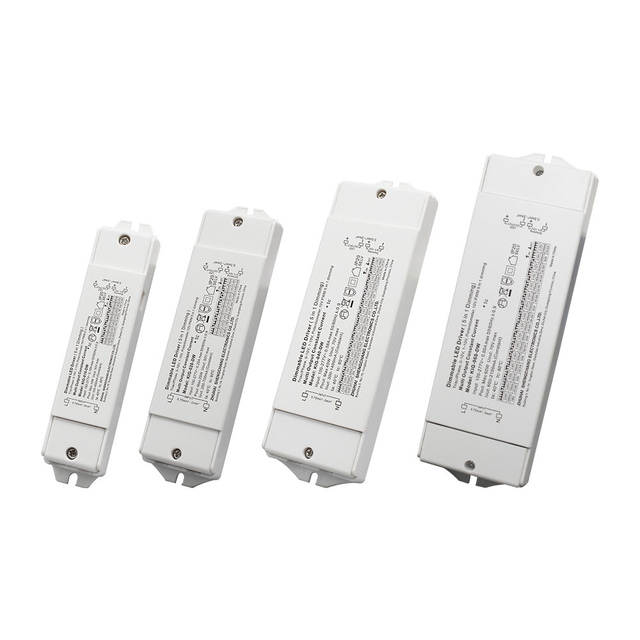
An LED driver is the unsung hero of any modern lighting system. While the LED chips produce the light, it’s the driver that powers them, acting as the system’s heart by converting AC power into the precise DC current LEDs need to operate efficiently and reliably. As the global LED market continues its rapid expansion, the technical and supply chain pressures on these critical components have never been greater. For manufacturers, installers, and end-users, understanding the challenges LED drivers face is key to ensuring performance, longevity, and safety.
This guide provides a complete breakdown of the major hurdles in the LED driver industry. We will explore the technical, environmental, and market-based challenges that define the landscape today, from thermal stress and dimming compatibility to supply chain disruptions and evolving regulations. By understanding these issues, you can make more informed decisions when specifying, installing, and maintaining LED lighting systems.
1. Understanding LED Drivers and Their Importance
Before diving into the challenges, it’s crucial to grasp what an LED driver does and why it’s so fundamental to the performance of any LED fixture.
What Is an LED Driver?
An LED driver is a self-contained power supply that regulates the power to an LED or a string of LEDs. Its primary functions are:
Power Conversion: It converts higher voltage alternating current (AC) from the mains into the low-voltage direct current (DC) that LEDs require.
Current Regulation: LEDs are current-driven devices. A driver ensures a constant, stable flow of current, preventing the LEDs from drawing too much power, which would cause them to overheat and fail prematurely.
System Protection: It includes circuitry to protect the LED system from voltage fluctuations, surges, and other electrical anomalies.
Because it manages the power so precisely, the LED driver is often called the “heart” of an LED lighting system. Its performance dictates the quality and lifespan of the entire fixture.
How LED Drivers Impact System Performance
A driver’s quality directly influences several key aspects of an LED luminaire’s operation:
Energy Efficiency: A high-quality driver minimizes wasted energy during the AC-to-DC conversion, contributing to the overall energy savings of the lighting system.
Flicker-Free Dimming: The driver controls dimming performance. A well-designed driver delivers smooth, flicker-free light across the entire dimming range, a common pain point with inferior products.
Lifespan & Reliability: While LEDs themselves can last 50,000 hours or more, the overall system is only as durable as its weakest component. Often, the driver fails long before the LEDs, making its reliability a critical factor in the luminaire’s total cost of ownership.
Compliance: Drivers must meet a complex web of energy efficiency and safety standards (like UL, CE, and FCC) to be legally sold and installed in different markets.
2. Major Technical Challenges Faced by LED Drivers
Engineers face a constant battle against physics and market demands when designing LED drivers. These technical hurdles are at the core of many performance issues.
Thermal Stress & Overheating
Heat is the primary enemy of all electronic components, and LED drivers are no exception.
Why LED Drivers Overheat
Even though LEDs are considered “cold” light sources, they still convert about 80% of their energy into heat. This heat, combined with the heat generated by the driver itself, can become trapped inside compact luminaire housings. Factors like high power density (more power in a smaller space), poor ventilation, and tight designs contribute to overheating.
Consequences
When a driver overheats, its internal components degrade faster, significantly shortening its operational lifespan. In the short term, overheating can cause performance issues like light flicker or even a complete shutdown if thermal protection is triggered.
Thermal Design Strategies
Manufacturers combat this with clever thermal management, including using aluminum housings that act as heat sinks, optimizing PCB layouts to distribute heat evenly, and employing advanced thermal interface materials to transfer heat away from critical components.
At Suretron, our drivers are engineered with advanced thermal management systems, utilizing high-quality aluminum housings and optimized PCB layouts to ensure stable operation and maximize lifespan, even in high-ambient temperatures.
Explore Our Industrial-Grade LED Drivers
Voltage Fluctuation & Power Instability
Power grids are not perfectly stable. Voltage sags, swells, and powerful surges from events like lightning strikes or switching heavy industrial loads can wreak havoc on sensitive electronics.
The driver’s protection circuits are the first line of defense. However, constant electrical stress wears these components down. There is an increasing demand for drivers with robust surge protection devices (SPDs) built-in, especially for outdoor and industrial applications where the risk is highest. A driver must be able to withstand these events to ensure its stability and protect the LED load.
Dimming Compatibility Issues
Dimming is one of the most persistent and frustrating challenges. With a wide array of dimming protocols—from traditional TRIAC and 0-10V to complex digital systems like DALI-2, DMX, and various wireless standards—mismatches are common.
Incompatibility between the dimmer control, the driver, and the LED load can lead to flickering, audible buzzing, limited dimming range, or erratic behavior. As smart lighting systems become more popular, the complexity of ensuring seamless dimming performance across different ecosystems continues to grow.
Navigating the complex landscape of dimming protocols requires expertise. Suretron offers a wide range of fully compatible dimmable drivers for TRIAC, 0-10V, DALI, and wireless systems, rigorously tested to deliver smooth, flicker-free performance.
View Our Dimmable LED Driver Solutions
EMI / EMC Compliance Challenges
Every electronic device that switches currents at high frequencies generates electromagnetic interference (EMI). LED drivers are no exception. This interference can disrupt the function of other nearby electronics, including radios, Wi-Fi, and medical devices.
Drivers must comply with strict electromagnetic compatibility (EMC) standards like FCC in the US and CE in Europe. Achieving this compliance is difficult, especially as drivers become smaller and more compact, leaving less space for the necessary filtering components.
All Suretron drivers are designed to meet or exceed global EMC standards from the ground up, incorporating sophisticated filtering to ensure they operate without interfering with sensitive equipment.
Learn About Our Compliance & Certifications
Efficiency vs. Miniaturization Conflicts
The market constantly demands smaller, more powerful drivers—a trend known as increasing power density. However, shrinking the driver’s physical size creates a fundamental conflict.
cramming more components onto a limited PCB area makes thermal management more difficult and can interfere with EMI filtering. It becomes a significant engineering challenge to maintain high efficiency levels and reliable performance in an ever-shrinking form factor.
3. Reliability & Longevity Challenges
An LED luminaire is expected to last for years, but this promise is often broken by a premature driver failure.
Component Aging & Degradation
Like all electronics, driver components degrade over time. The most notorious culprits are electrolytic capacitors, which are highly sensitive to heat and are often the first components to fail. Their lifespan can be cut in half for every 10°C increase in operating temperature.
Other factors include thermal cycling (the expansion and contraction from heating and cooling), which can cause solder joints to crack, and exposure to harsh environments with high humidity, dust, or corrosive salt mist.
Failure Modes in LED Drivers
Driver failure can manifest in several ways:
Output current instability: Leads to flickering or changes in brightness.
Component failure: Failed MOSFETs or degraded capacitors can cause the driver to stop working entirely.
Protection circuit malfunction: A failure in the short-circuit or overload protection can lead to catastrophic failure of the driver and the LEDs.
High-Power Application Stress
The demands on drivers used in high-power applications like industrial high bays, streetlights, and stadium lighting are immense. These drivers often operate at or near their maximum load for long, continuous periods, which accelerates wear and tear on all components. With the market for high-power LED lighting growing, designing drivers that can withstand this level of stress is a major focus for manufacturers.
4. Environmental & Application Challenges
Where a driver is installed has a massive impact on its design and required durability.
Outdoor Deployment Difficulties
Outdoor environments are brutal. Drivers must be designed to handle:
Extreme Temperatures: From freezing cold to scorching desert heat.
Waterproofing: They require robust sealing to achieve IP ratings like IP65 or IP67, protecting them from rain and moisture.
UV Exposure: Sunlight can degrade plastic enclosures and cable insulation over time.
Surges: Outdoor installations are highly susceptible to lightning-induced surges, making high-level surge protection essential, particularly in regions like Asia-Pacific.
For harsh outdoor environments, Suretron’s IP67-rated drivers are built with robust surge protection (up to 10kV) and UV-resistant materials to withstand extreme temperatures, moisture, and lightning-induced surges.
Discover Our Waterproof & Surge-Protected Drivers
Vibration, Dust, and Corrosion
Some applications present unique physical challenges. In transportation lighting (trains, buses) and mining equipment, drivers must withstand constant vibration. In industrial factories or agricultural settings, they need to be protected from conductive dust and corrosive chemicals. This requires specialized enclosure materials and protective coatings on the PCB.
Regional Electricity Standards Variation
The world runs on different voltages. A driver may need to be compatible with 110V in North America, 220V in Europe, or even 277V/347V in commercial settings. This regulatory fragmentation means manufacturers often need to design and certify multiple versions of the same product, increasing engineering workload and inventory complexity.
5. Smart Lighting & Digitalization Challenges
The rise of the Internet of Things (IoT) is transforming lighting into a sophisticated digital network, bringing a new set of challenges for LED drivers.
Increasing Complexity of Smart Protocols
Drivers are now expected to be fluent in a growing list of communication protocols, including DALI-2, D4i, Zigbee, Bluetooth Low Energy (BLE), and Wi-Fi. Ensuring a driver can integrate and communicate seamlessly within a specific smart lighting ecosystem is a major software and hardware challenge.
Data & Connectivity Requirements
Smart drivers are no longer just power converters. They are becoming data hubs, equipped with NFC for wireless programming, sensors for occupancy or daylight harvesting, and the ability to report diagnostic data on energy consumption and operating status. This requires more sophisticated firmware and higher processing power.
Cybersecurity & Firmware Update Challenges
Connecting a driver to a network introduces security risks. Smart drivers must be designed with secure communication channels to prevent unauthorized access or malicious attacks. Furthermore, manufacturers need a reliable way to deploy firmware updates over the air to fix bugs or add new features, adding another layer of complexity to their design and maintenance.
6. Manufacturing & Supply Chain Challenges
The journey from design to delivery is fraught with its own set of obstacles that can impact driver quality, cost, and availability.
Raw Material Cost Fluctuation
The price of key raw materials—including copper for magnetic components, integrated circuits (ICs), and aluminum for enclosures—can be highly volatile. These fluctuations directly impact the driver’s final cost, making it difficult for manufacturers to maintain stable pricing.
Global Supply Chain Diversification
Historically, LED driver manufacturing has been concentrated in China. However, trade tensions and risk mitigation strategies have led to a diversification of the supply chain, with more production moving to countries like Vietnam and Mexico. While this builds resilience, it can also lead to higher logistics costs and longer lead times.
Quality Control Consistency
Maintaining consistent quality across millions of units produced in high-volume factories is a monumental task. It requires rigorous automated testing, statistical process control, and navigating complex certification audits for different global regions.
7. Market & Regulatory Challenges
Finally, drivers must navigate a fast-moving landscape of regulations and customer expectations.
Rapid Global Regulatory Expansion
Governments worldwide are tightening energy efficiency standards. Regulations like the EU’s Ecodesign Directive, California’s Title 24, and DesignLights Consortium (DLC) requirements in North America are constantly evolving. Manufacturers must be in a state of continuous redesign to keep their products compliant.
Increasing Customer Expectations
As the market matures, customers have become more demanding. They now expect long warranties, flawless zero-flicker performance, universal compatibility with any dimmer, and increasingly compact and lightweight designs—all at a competitive price.
Price Pressure & Market Competition
Despite their complexity, LED drivers are increasingly viewed as a commodity. This puts immense price pressure on manufacturers, forcing them to find a delicate balance between reducing costs and maintaining the performance and reliability their customers expect.
8. How Manufacturers Are Tackling These Challenges
Leading manufacturers are not standing still. They are actively innovating to overcome these hurdles through:
Innovations in Power Electronics: The use of new semiconductor materials like Gallium Nitride (GaN) and Silicon Carbide (SiC) allows for more efficient, compact, and cooler-running drivers.
Better Thermal & Structural Designs: Advanced modeling software helps engineers create more effective heat sinks and optimize PCB layouts for superior thermal performance.
Smart Manufacturing & Quality Control: The adoption of Industry 4.0 principles, including fully automated testing and real-time data analysis, helps ensure every driver leaving the factory meets strict quality standards.
9. FAQs About LED Driver Challenges
Why do LED drivers fail more often than LED chips?
LED drivers contain more sensitive electronic components, like electrolytic capacitors, that are highly susceptible to heat and electrical stress. LEDs are solid-state devices with fewer failure points, so the driver typically wears out first.
What causes LED driver flicker?
Flicker is usually caused by an incompatibility between the dimmer, driver, and LED module. It can also result from unstable output current due to component degradation, overheating, or poor design.
Why is dimming such a common problem?
There is no single universal dimming standard. The wide variety of dimming technologies (TRIAC, 0-10V, DALI, wireless) and the lack of interoperability between different brands create frequent compatibility issues.
How can I improve LED driver lifespan?
Ensure the driver is used within its specified temperature and load ratings. Provide adequate ventilation around the fixture to prevent overheating. Use drivers with robust surge protection in areas with unstable power.
What environmental factors damage LED drivers the most?
Heat is the most damaging factor, as it drastically accelerates the aging of internal components. Moisture, dust, and electrical surges from lightning are also major causes of premature failure, especially in outdoor and industrial settings.
10. The Future of High-Performance Lighting
The challenges facing LED drivers are numerous and complex, touching on everything from semiconductor physics to global geopolitics. As the LED market continues its relentless growth, the demand for more efficient, smarter, and more reliable drivers will only intensify. These components are no longer just an accessory; they are the enabling technology for the future of lighting.
For anyone involved in the lighting industry, selecting a supplier who understands and actively addresses these challenges is paramount. The long-term performance, safety, and economic success of any LED lighting project ultimately depend on the quality of the driver at its heart.